Chukar Recess

A scrape on my right knee, reminiscent of a ten-speed crash. A bruise on my shin, running knee-cap to ankle. Another on my ass. My shotgun has similar injuries. No matter. I’ve been playing.
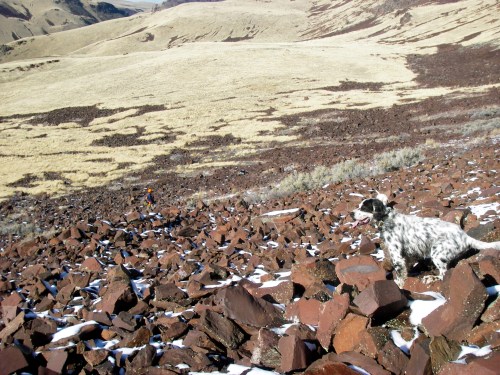
I’m doing it again. Now running. She is on birds again, on the slope below, nose in the wind, working them. No doubt. Birds. Here we go boys! I skip over stone and slip on scree, and vault over cactus and long-jump small arroyos. I carry my shotgun in my right hand and sprint. She works the birds with care and expertise and still they go up out of range, no doubt spooked by the stampede of hunters to the white setter’s playground. No matter. It is good to be young again. I can’t stop giggling.

The school yard

– TR

Nothing

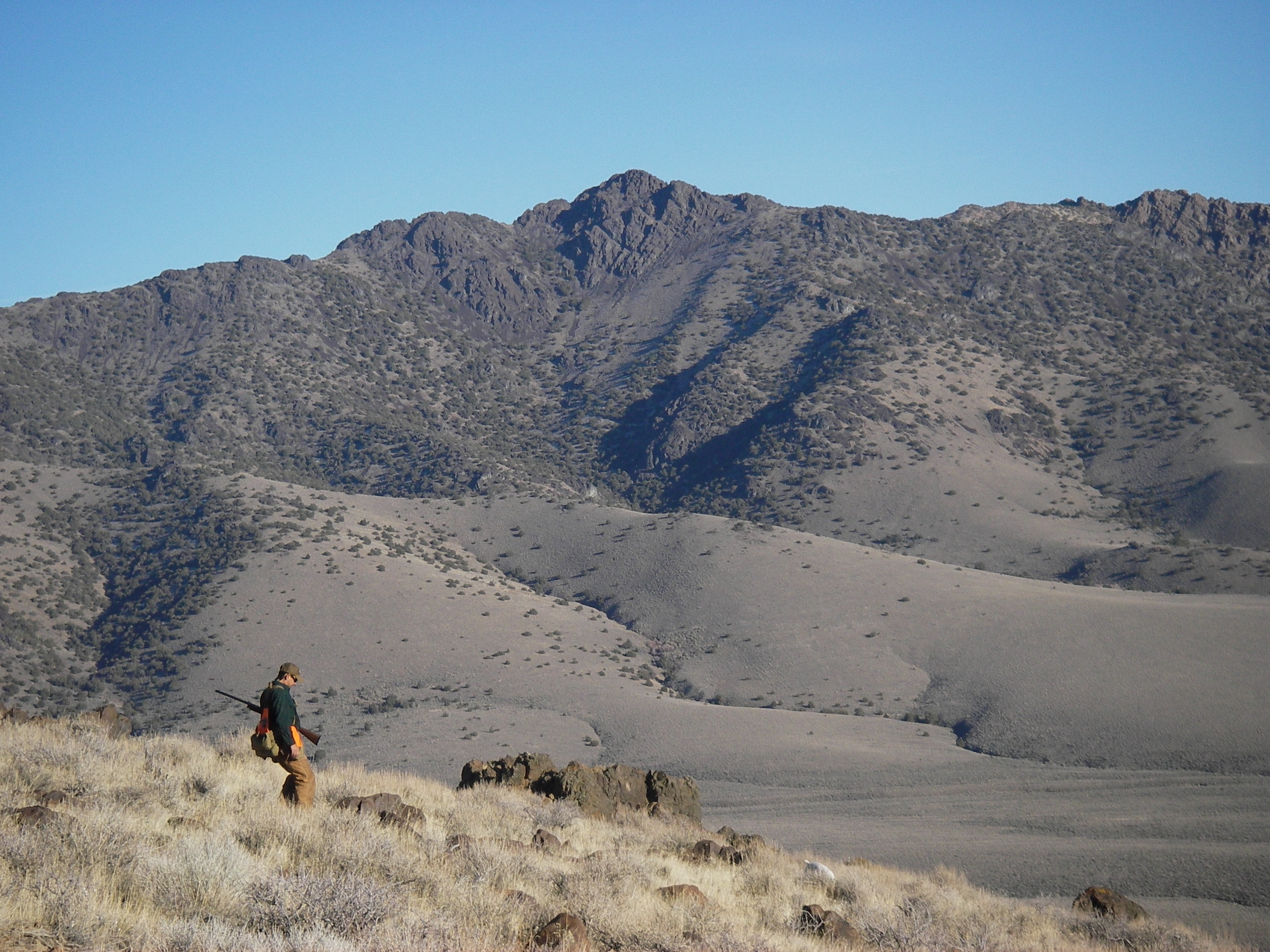
This nothing, this sheet of land, this openness, this bigness. Nothing. Stand. Then turn in a slow circle, eyes open. Nothing stretches left and right, ninety, one-eighty, two-seventy, three-sixty. Nothing.
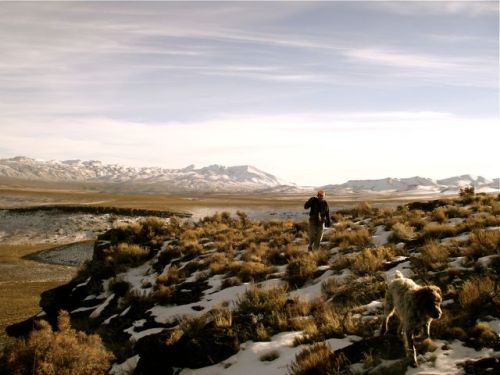
Walk into it. Follow good bird dogs who follow their olfactors into a northward wind. Sagebrush at the feet. Greasewood. Four-winged saltbush. Sand. Sandstone. Sage again, sage always.

The wind hard in the face now, coming strong from the south, clouds forming, joining, mating, darkening. Still after the dogs, panting hard now and pivoting in growing wind, ears flopping with movement of body and earth. Still, nothing. No birds. Not even a track in sand, nor white-wash of turd on rock, nor anything.
A hawk overhead, passing on the wind, carried, pushed, surfed. Hardly a wing beat, just a kite of feather and talon and sharp beak.
Still into the wind, still after the dogs, still looking for track and scat and dusting. Still on.
An hour now. Then two. Three. Rest in steep ravines, dogs watering in natural troughs of stone. Carved deep and ancient. Crunching on through bitter small sage, over needling cactus. On, still in the wind.

Likely spots, tall grass in sagebrush stands, green-up on south slopes. Nothing.
A skeleton then, red feet. Plucked clean. Except for those feet. Those damned feet. Usually running and making tracks. Damnable, loveable little bastards.

Juniper twisted by wind, hardened and sanded and tortured.
Finally enough. Turn. The truck now ahead, not behind. How far? Three miles? Five? Six?
A wide swing. A wandering course. Following dogs. Occasionally following faded experience, judgment, upland teachings. Last year’s fountains dry. Going there, checking for this year’s generation. Informed by memory, swatted by reality. But mostly following dogs. Trusting. They know. If there is anything instead of nothing, canine instinct will prevail.
Canyons now, deep ones, scrambled. Sliding on sandstone, stopping again at a trough, hot and panting dogs lying in meltwater. Shotgun slung over one shoulder. Shells heavy in the vest, juniper berries collected. Back home, back at the woodstove, one berry on a stovetop will scent the entire house.
An antler shed. Leave it. A chipping, then a point. Leave them too.

Mind wandering, then coming back again, eyes following the dogs, whistle tucked and un-used. They are fine-tuned and all business and there is pride there, right there in the heart. Heavy too because the oldest, the alpha male, lopes with a limp and will be stiff on the front end and decommissioned in the morning. But now, onward, into nothing. Alone out here except for canine and raptor, a mule deer doe stotting over far gray ridge, hide matched to the land. Invisible without movement.

Water low now, sloshing in the bottle and stomach growling; lunch left hours ago. Sun slowly falling out of the sky and toes mashed hard by downward slides, heels feeling hot from upward slogs. Left knee complaining of high school football. Ignore it. On. Onward. Still, nothing.

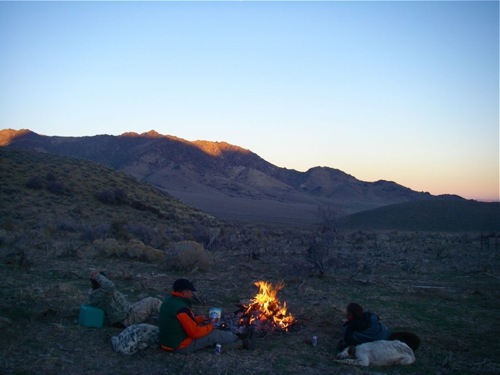
Finally, the truck. Keys in the gas cap. Water from the jug for the dogs. A beer. Cold and goddamned good on dry throat and now the sun almost gone and a wash of color–orange and red and pink–across the sky. Dogs flopping down hard on the soil by the truck wheel, panting and stretching out and drooling cold water. Thirst slaked. On the tailgate now and a cigar, smoke curling, blending with sage scent. The wind down and gone. The bird vest empty. The gun still clean.

Not nothing.

Something. –TR

Ending it Right

We had decided that we weren’t going to accept the end of the season with anything resembling passive resignation. There would be no finding of lame excuses for occupying these end times with other, less worthy activities, while a few days of permissible bird chasing remained. No pathetic, “it would be nice to get out one last time, but it’s too cold now,” sniveling.

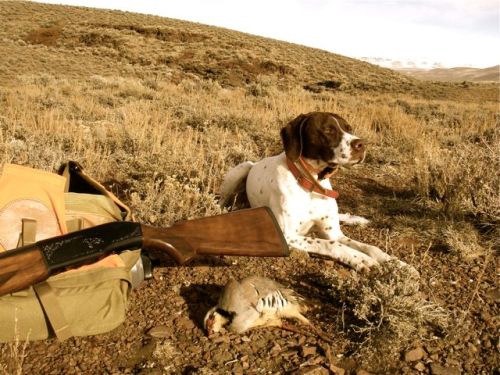
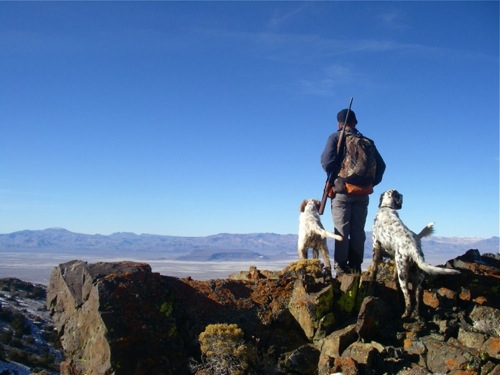
Perhaps most importantly, we wouldn’t be able to look these guys in the face if we simply let the season end with a fizzle:

And so, one last trip was hatched. A place none of us had hunted before, interest buoyed by whiffs of rumor and suspicion that an elusive, red-legged partridge might find such barren country to its aberrant liking.

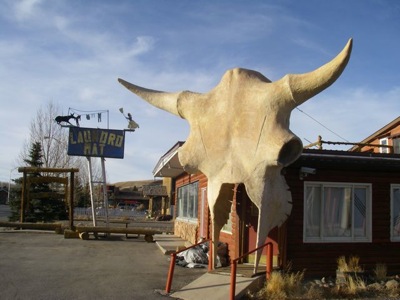
It wasn’t easy, but frankly, in a perverse way, we wouldn’t really want it to be. This isn’t about “easy,” or we would be sharing this country with the hordes; McLodges springing up like blight on a country that deserves to remain desolate and wild and beyond the reach of those who think that with enough money, any sort of instant gratification can be had. These birds, in their wild state, will always demand more than you assume. Unless, of course, you go in assuming that an ass-kicking and a steaming hot plate of humble pie are on the menu.

In the end, we can unashamedly say that we wrapped up the season with deliberateness, with new country under our boots, with a few birds in the bag and the satisfaction of knowing we didn’t listen to any of the all-too-easy excuses for not going that can leave one staring out the window. No. We chose the only conceivable way to face the next seven, bird-less months with a modicum of fortitude, till we can feed our upland souls once again.

– Smithhammer

When the Weird Turn Pro

There is a headspace you sometimes get into on road trips. Or a headspace that I tend to get into, anyway. In this particular case, it was the pernicious result of a hangover, a couple Reese’s, a bag of cheese puffs, some strong coffee and three surreal days of seeking chukar. I was driving home, the trip behind me and the Tetons in ominous storm shroud before me, killing time by playing the game in my head of trying to explain all this to someone.

Sometimes in the midst of these hell-bent junkets, it feels like the things you see along the side of the road have been deliberately placed there to conspire against your already zoned-out, chemically-fueled, tenuous grasp on road reality. These must be documented in the event that your sanity is some day put on trial. It may be the only defense.

An entire life lived in the West, and there are times when the scale of things still screws with me. I look up at vertical caprock, trying to gauge if it’s 500′ or 1500′ above, though it really doesn’t matter – I’m going up there regardless.

An hour or three later, I’m standing on top, looking at telltale tracks in the snow, the sore legs and lack of oxygen already an afterthought as the little bastards take control of my brain, yet again.

The dog vacillates between ranging too far and alternately doing exactly what he should, still working to find that fine, triadic balance between enthusiasm and focus and teamwork. He slams on point; as dramatic as if he’d hit a brick wall at full speed, and I try to get to him before one of the parties involved breaks this fleeting impasse. Later, it’s not the bird getting up, not the passing shot, not the satisfaction of finding my mark that I will remember – it’s that deranged, amber fire in his eyes as he holds point and lets me know that we’ve found what we’re looking for. This continues to haunt me as I type; those blazing, otherworldly apertures etched into an obscure corner in the back of my brain reserved for a few indelible memories. The same eyes that now just belong to a goofy pup laying on his back with his legs in the air on my living room floor.

In the end, what would I say to the uninitiated? That I had driven over 500 miles round trip, to stay in a cheap motel, eat a lot of bad food, spend hours driving on rough two-track across tragically over-grazed former bird habitat, with but one bird in the cooler to ultimately show for it? And that for whatever twisted reason, this had fed my soul?

– Smithhammer

In the Hall of the Chukar King

Out of breath, I stop to leave a little water in this otherwise dessicated landscape. Looking down, I note that my boys are as red as chukar legs in that detached, objective way not uncommon to moments of pain and survival. This trip is beginning to take a toll on me. Looking up, I survey a thousand feet of loose scree and caprock and cheatgrass above, and hear them laughing from on high. I try not to take it personally, though it is most definitely personal, and I continue scrambling to reach their steep patch of hell, simmering with murderous intent.

I know they are close – the dog starts getting birdy and then locks, just as half the covey pulls a flanking maneuver, running around behind him and then they all get up simultaneously – a dozen chukar exploding and tormenting him from all sides. He predictably loses his shit, jumping in the air and spinning and barking. Poor little bastard. No good dog deserves this. Instead, some of them, like some of us, simply become addicted in spite of better judgment; gluttons for punishment.

As the chaos subsides and I tell Hank it wasn’t his fault, I hear the lone holdover bird flush behind me. Wheel and fire and the bird drops decisively. Mistakes are unforgiving here; a maxim that applies to us as much to us as it does to them.

It wasn’t a classic take over a point, but you don’t always wait for that in this country, on this quarry. No, this is guerrilla warfare, and I don’t mean that lightly. Refined gentlemen and their traditions and their rules remain far below, looking up at places like this through binoculars.

From above the saddle I watch the covey flush wild and take cover in a jagged outcropping, disappearing into the crevices. We learn from their flanking tactics and return in kind. It’s so damn steep I practically have one knee braced into the hillside when I see the GSP locked up hard, balanced on a boulder. I catch my breath, taking a second to admire the work of this first-season pup, and release him with an “ok.” He rockets in and the little devils get up and I promptly send two of them to meet their infernal maker. I watch the birds drop 75 yards below me on a 50 degree slope of nasty, loose, volcanic talus. Even in death these fiends make you pay.

Lest the wrong impression is given, I spend the next day going through an entire box of shells with only two hitting their mark. Fast passing shots on birds dropping from above at mach speed, whiffed. Shots taken at birds that I knew damn well were out of range, solely out of frustration, hoping to bend physics to my will. It didn’t work.

Evening is not exactly  the affable return to the sprawling lodge after a jaunty day afield one imagines in the sportsman tomes of yore. It is instead a deliberate refueling with piles of greasy sustenance; a licking of wounds with corn liquor salve and barley-based anti-inflammatories. Plotting, debriefing, refiguring tactics – a team effort to recharge before tomorrow’s redeployment. The banter is generally about as offensive as you can imagine. The easily affronted might want to camp somewhere else. Far away.

Dawn reaches our cold little camp in the arroyo and high-octane joe eradicates the last vestiges of rust from sore muscles and we’re off. We ascend to the Hall of the Chukar King yet again – knowing they await far above, assuming they’ll be no easier than they were yesterday, working like you would for no other upland species, to return spent, with maybe a few birds in the bag and the weary contentment that only comes from having your ass handed to you by a small, crafty partridge in a vast, alien land.

We’ll be back.

– Smithhammer

Generations

In camp and around the house, he is a big loveable goofy bastard.

Right now, though, he’s on point and it is as classic a point as a setter man in a life of setters is likely to see. He is white and handsome and up against the skyline behind a juniper and frozen. Solid. A salt pillar.

One covey back, he had pointed and then broke with the shit-hell expression of a pup on his mug, flushing birds like playing cards shot into a stiff wind. Rotten sonofabitch, with a smile.


This time, I tell him “hold, buddy” (one does not command this dog, one converses with) and stumble-skip across mean footing and see the covey.
They go up in a flurry of gray wing and clown’s mask and I swing carefully and pull the trigger and one goes down. I do not think about a triple or even a double. One is enough, one good chukar after one good point.
His name is Echo and he’s here on the mountain with me as a partner, not as a dog doing the work for a walking man. For the most part I am not in that run-and-blast, stagger-and-fall, curse-and-bleed rant that is chukar hunting in on-end country. Instead I am largely lost in thought. Soaking. Absorbing. I’m all in.
His real name is Greylock’s Hank’s Echo. Greylock is a good kennel back east, but this dog is a western lad. It’s the “Hank’s Echo” that is the important thing.
Sage and juniper and greasewood run through his veins. Hank was his grandfather and in this country of echoes on rimrock, Echo is his echo.


A decade before, I climbed the same hill with Hank–a dog all bones and balls–and we shot chukar left and right and Hank pinned them all and brought them all to hand. In the cooling light of a northern Nevada day going away, we walked down to the truck one thousand feet below, Hank at my side and the warmth of a half dozen chukar dead against the small of back. The caprock across the valley splashed pink then gold-red and then it was gone and the chill of December was on me.
A decade gone by and a bird dog buried at the base of a chukar cliff in another state, a place where chukar walk across his grave and his name is carved in soft yellow sandstone above. Now his grandson at my heel, then cast out into the thick of it–the old cold lava, the junipers, the sage, the cheatgrass greening in December sunlight and a fresh-dead partridge in that same frayed-by-years bird vest. Dead and warm against the small of my back and a honed-hard, bones-and-balls white setter out in it, after them.


The third generation hunter after perhaps the fifth or sixth generation quarry. Life ticks on.                                                                                 –TR

Stupid is communicable

The first time we got stuck out there, you could probably forgive. The second time? Not so much.

Out there is Northern Nevada. Washed out, flung out, far out. Out so far that satellites don’t even pass over. We were there, me and the Jack Mormon brothers, for chukar. Or probably more correctly, for our dogs. Is there any reason to drive 14 hours from home to run around in some of the remotest country in the states, get your vehicle stuck for days, and end up getting stuck again . . . if not the dog? Come to think of it, there probably are, but those reasons are not the subject of this tale…

The first time we got stuck out there, you could probably forgive. The second time? Not so much.

Out there is Northern Nevada. Washed out, flung out, far out. Out so far that satellites don’t even pass over. We were there, me and the Jack Mormon brothers, for chukar. Or probably more correctly, for our dogs. Is there any reason to drive 14 hours from home to run around in some of the remotest country in the states, get your vehicle stuck for days, and end up getting stuck again . . . if not the dog? Come to think of it, there probably are, but those reasons are not the subject of this tale.

The first sticking came as we set up camp–a wall tent for cooking and a couple of sleeping tents. Two diesel trucks and an old Ford Bronco. Six bird dogs–four labs and two setters. Two cases of beer per person. A woodstove for the walltent. Firewood for the stove. A handful of cigars for the apre hunt. We got camp set up well enough, then I decided to move my old ’92 Dodge and the frozen earth I’d parked on dropped out from beneath me like Grandma’s Angelfood cake. We tried to pull it out with the other truck and sank that one too. Then we spent the entire day and half the next digging. We had radio coverage, so we dug and listened to the first game of the first round of the NFL playoffs, then we listened to the next game and the next. Gained a foot. Sank a foot and a half. The diesels were too heavy for the old Bronco to pull out. We put all of our firewood under the truck tires and not in the woodstove. We dug some more. I crawled under the guts of my truck and dug with a hand trowel. Got the Bronco stuck. Unstuck it. Broke a Hi-Lift jack. Got into the beer. Broke a tow strap. Went to the wall tent for more beer. Climbed out of the wall tent and retrieved muddy wedges of firewood from beneath the truck, light a fire, ate elk burgers and went to bed.

The next morning, we were at it again, digging. Broke another tow strap. Gained two feet. Listened to another NFL playoff game. Sank the trucks deeper. Then, anticlimatically, were out. Out.

Went hunting, one brother one direction, the other the other, me another following a wash of pent up dog-dom wound tighter than an eight day clock after 14 hours in the truck and 36 waiting for their human partners at the campsite mud bog. Six chukars later, I staggered back to the truck and found the Jack Mormons also with limits. We’d taken out our revenge on the birds. Reverse karma. It usually goes another way.

The morning hung low and gray and depressing, threatening more rain. We hadn’t seen a soul in three days. Not even an airplane. Rain would mean more mud. We piled into the Bronco, three guns, three dogs, three beers each for the post hunt.

The chukar were at the far end of the valley, up on a torn up patch of real estate, rock and mountain mahogany and sage and cheat grass piled up like tossed laundry. Between us and them were two stream crossings. In other weather, the crossings were arroyos. In this weather, streams. The first went well enough, the Bronco grinding and spraying water in brown sheets and then we were across. The second was less honest–an eroded bank and a cold stream of mud water and a sharp drop of more than two feet to the water, and the run out was not pretty either–another sharp bank that the Bronco would have to climb and then up onto the two-track and onto the chukar ground.

There was little discussion before the trouble started and if you talk to enough accident survivors, this is a common mantra–all of a sudden, without discussion, you are screwed. And we were. The drop to the stream lurched us forward in our seats and then the water pushed us hard left, downstream and the throttle roared and we washed out into the stream and farther downstream and then water came up over the running boards on the upstream side and we were indeed, screwed, blued and tattooed. We bailed. Dogs out. Guns out. Packs? Out. We scrambled to empty the old truck and the water washed it farther downstream. For a minute there, like a herd of elk taking rifle shots from an unknown location, we milled. Then the moment was gone and we were going, frantically pulling gear and tools, wading knee deep in strong current, balls puckered. Damn. Really? Did we just do this? My friend’s face was the color of piss porcelain.

“I’ll start walking.”

There wasn’t much to discuss. It was mid-morning and camp was eight miles away.

“Okay.”

I ran for a while, then slowed. Hunting boots. Ike jogged beside me in that loose-jointed, toe-dragging gait of his and I walked fast then broke into a run for a while. I’d been running to train for the chukar hills and it felt good after a day and a half of crawling beneath the pickup and only a half day of hiking. So I did this for a while, thinking now and again, of our predicament.

We had two good pickup trucks back at camp, but there was that first crossing of the stream. No jack. A tow strap that had been broken and retied and was now about six feet long. A broken shovel.

I ran again. Then speed walked. Ran. Walked. Ran. Walked. Ike wondered where the hell the chukars were. Ran some more. Ike jogged.

I heard it before I saw it, an engine somewhere, so far off it sounded like an airplane and I looked skyward and saw nothing except gray bile. Walked some more.  It got louder and then, it came around the corner like some sort of yellow metal dinosaur–a backhoe. We were well and truly stuck and here came the one thing that could really make a difference–a backhoe. The operator slowed and opened the cab and asked with the heck I was doing out there and I told him and he said climb aboard. And so I wrapped my right arm around a strut on the outside of the cab and Ike jogged alongside, going back the other way.

The Jack Mormons welcomed me like a snowbound wagon train cheering Jeremiah Johnson to the rescue. I hopped off and slapped skin and the operator–who was traveling to his mine site in the desert and just had happened to come that way that morning–extended the arm of that big hoe and tied a tow strap to the Bronco and half lifted, half pulled it out of the water. We fired it up and water and gravel shot out the tailpipe but it ran and we backed up away from the stream and damn near kissed the ground. We promised a bottle to the operator and then looked at each other and shook our heads and, without consultation, waded out into the stream and forded it, to the knees, then thighs. There were chukar to hunt, by God.

There are no photos. You are just going to have to believe me.

–TR