A hunting song

There aren’t a hell of a lot of hunting themed songs out there. Even in the catalogs of the less-than-famous troubadours of rural America that I prefer, hunting is a topic not often broached.

One of my favorite fall disks is Adam Carroll’s Lookin Out the Screen Door.

There’s a tune on that disk that might just be the best bird-hunting song I’ve ever heard. Of course, it’s not really about bird hunting at all. But I like it anyway.

It’s called Errol’s Song and it’s one of my favorite pieces of musical poetry.

Selected lyrics from Errol’s Song, by Adam Carroll

There’s coffee and biscuits on the stove in the kitchen
There’s a crack in the ceiling and a screened in front door
And as the fog starts to settle on the banks of Lake Arthur
I can still taste the whiskey from the night just before
It’s the Crown Royal whiskey from the night just before

And it’s hard to get up at five in the morning
Put your guns, put your shells, put your wine in a sack
We look like some militia in our boots and our camo
With a bird dog named Milo, he’s asleep in the back

He held my hand when my boots got too heavy
With the mud from the rice fields coming to my behind
We set out the decoys in the dark on the levy
And we walked through the graveyard of the rusted combines

Of course, there are other hunting songs. Ted Nugent has written more than a few, but personally I think Ted Nugent is a douchebag and a poser who’s bad for hunting. I’ll give him the benefit of the doubt when it comes to Damn Yankees (it was the 80’s after all.) But the fact remains, Nugent hunts over bait and inside high fences.

As far as I’m concerned that makes him an asshole of the highest order, not fit to talk about hunting much less sing about it.

We could use a musical ambassador for hunting, I nominate Adam Carroll solely on the basis of Errol’s Song, but I’m willing to consider others if you got ’em.
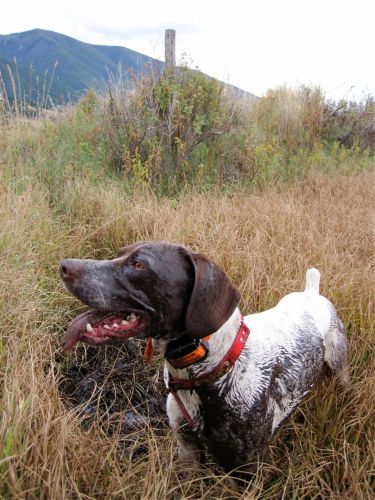
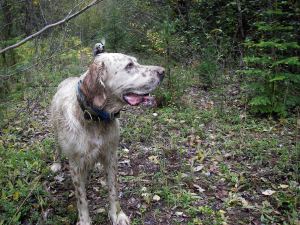
Cleanliness is far from Dogliness.

I was looking back through some of last season’s pics the other day, and came across this one:

I stared at this pic for a while, remembering that fine fall day with a good friend in Montana. But more than anything, the sheer unbridled, unashamed joy of a dog covered in mud brought the smile to my face. It was a great day to be alive, for both of us. And at the end of the day, whether the game bag is full or empty, what more can you ask for?

Get here already

September woods await.

It was cool this morning when I walked the dogs down by the creek. Cool enough for a fleece, cool enough to fire the engine in anticipation of another season.

On this, the last best month of summer, I find my thoughts drifting. Drifting to the next month, the best shortest month of the year. Screw February. February needs to be short. September needs to be twice as long.

I walk these mornings with steaming mug in one hand and watch the herd swing out into yellowing grass and I pause at the bridge over the crick and peer into clear water for little brown trout scattering from shadow. I walk out and talk to the horses and the dogs dig mice and point sparrows and then I walk back to the house and go to work. But my thoughts drift again.

Drift to elk bugling from black timber. Drift to blues rising before the gun, thundering from chokecherry and alder. Drift to grasshoppers–real and imitation–bobbing on current, right next to the bank. Drift to perfect precision cast, drift to the list of things to do yet, before that bright day on the first of the shortest best month of the year.

Most of my winter’s firewood is still up in the hills, baking in August heat, waiting to be felled and blocked and hefted into the old F250. Most of my fishing is here in these few wilting weeks of the best month of summer. Why, I ask myself, do I wait to get firewood in August? Panic sets in and I run to the hills in the evenings with a chainsaw. Why didn’t I do this in June? It was raining then, I guess. So I sweat through it, itchy with wood chip and bug bite. Sweat now while I must, for in only a few weeks, there cannot be work to do when a shotgun needs exercise.

During my lunch hour now, I shoot my bow. A dozen shots. Then I go back inside to the computer. In the mornings, after the walk, I unload last night’s firewood haul before the sitting at the computer for the day. During the day, I take breaks and unload some more and by quitting time, the old truck is empty and I can drive up to the mountains and haul out another load. Repeat. Routines.

Tonight, I’ll take an evening off and float a stretch of the river with a good friend and a box of hoppers. The imitation kind, not the Nick Adams tobacco-juice spitting kind.

Then it will come again, the panic of a coming season and the need to be out in the woods or on the open flanks of Montana autumn with a shotgun or a bow or a rifle or a fly rod instead of up in the woods with a chainsaw and some bar oil. The goal is to have it all in, all up in the woodshed before that shining day. It is a sin of the lowest order to be working in the woods when the dogs are stuck in the kennel and the season is open, I think. Do it in August, even if that means missing some fishing. Do it now before September because when that month comes, you need to go. Do it now. These last weeks of a good summer, dwindling and too short in themselves. I waft between get-here-already and shit-not-yet.

Such it is.

–TR

Dirt road soundtrack

Dirt roads traveled in the company of bird dogs and dog-eared maps deserve their own soundtrack.
The season is still somewhere ahead, but the road begins to beckon. The first trips are for mountain grouse, so September is for driving. It’s for sunflower seeds and cold beer in the cooler, lunches in Aspen groves and beside tiny trout water that you promise to re-visit with a rod, but never do.
Much of hunting blue grouse and ruffies in the west is an arm-out the window pursuit.
Later in the season, we’ll make the long treks into the backcountry for prairie grouse and chukar, starting early from the spots we know.
The first week of September, we set the cruise at 26 mph and glance at a stack of maps printed off with intentionally cryptic notes (lest they fall into the wrong hands) as we explore old logging roads.
The windows down and the dog whining in anticipation, we’ll stop and look, hunt a spot, then back in the truck.
We’ll spin a disk of old favorites and rejoice in birds and dogs and the roads to get there.
Here’s my disk for day 1
Stay a Little Longer – Willie Nelson
Photograph – Charlie Robison
Broken Bottles – Sons Of Bill
Out here in the middle – Robert Earl Keen
Circle back – John Hiatt
Threadbare Gypsy Soul – Pat Green
Down By the Water – The Decemberists
Guitar Town – Steve Earle
Pearl Snaps – Jason Boland & The Stragglers
Birthday Boy – Drive By Truckers
Lonely All The Time – Reckless Kelly
Horshoe Lounge – Slaid Cleaves
Rusty Cage – Johnny Cash
Wicked Twisted Road – Reckless Kelly
Snake Eyes – Ryan Bingham

Homestead Rhubarb

In the autumn, you dream of Huns bursting from the rubble that was the old milk house, and you carry your shotgun cradled ready. You follow the dogs, and they follow their noses.
But now the land is sharp green from rains that don’t seem to quit and when you go, you don’t follow the dogs, they follow you, and they don’t pick up scent, they pick up the bothersome beggars’ ticks burs from last years dried stalks of houndstongue. You go where you want and sometimes, you walk among the old buildings and think about a different time, a different era.

There’s a hand-dug well and fifteen feet down, water. It is rock-lined and covered with rotting timbers. Peering down into those depths gives a tremor in your soul. A dark, wet, fearsome cavern. You think about being down in there, digging the damned thing by hand, and placing each one of those rocks. You think about the darkness, but then you look up and above, is freedom. Above, sky. Lots of sky.

Once, you ran into the old man whose grandparents homesteaded the place. 1898. Part of the Desert Land Act of 1877 which quadrupled the Homestead Act’s woeful 160 acres to 640 if you could irrigate the place within three years. Up on the mountain, you have seen the evidence of this – old dams and a series of ditches dug by hand and a walk-behind plow. Tough men. Tough women. Tough horses. Grandpa died in 1919 and Grandma in 1932. The old place was burned down by teenagers on a lark before the Second World War.

In this early summer in this new century, before the cows come out on the land and before the grass really comes, you ride your best saddle gelding and fix fence to keep the cows in and the neighbor’s cows out. You ride and you think of homesteaders because it’s too early to think about Huns and when they start pairing up, you quit bringing the dogs because you want the Huns to marry well, be happy, and raise lots of children. Besides, you are tired of picking burs.

As spring comes, you watch it coming: pasque flowers at first, up in the timber edges and sage benches. Phlox next, then spring beauties then avalanche lilies, then marsh marigolds up on the edge of the crick where young aspen are budding and ready to burst forth like words from a pen. It is a cacophony of chlorophyll.

Each day as you ride past the old place, with its scattered rock foundations and its still-stout railroad-tie post and rail fence, you think about hard land and hard people and tough living. And then you find it. Ridden past it many times, but now, up in the saddle, it is obvious and big: a patch of homestead rhubarb, 100 years or more old, growing out there feral among the sagebrush and spike fescue. Untended and still growing, still going, still here long after the humans who planted it have left and been forgotten except only in the mind of an old man who once was a boy who remembers. Everything else, every companion plant in the garden, has been gone for decades. Save rhubarb. Still here, still growing. How long since a pie cooled on a countertop that was made from that rhubarb? How long has that plant been growing and waving its big leaves and bright red stems in the Montana summer breeze? How long since laughter of children? How long since it was watered by hand with water from a hand-dug well?

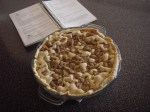
One evening as the sun tilts west and it is still daylight at nine, you decide to take a drive out there, out west of your place and you walk among the sage with a plastic sack in your hand and a doe antelope with twin fawns barks at you from the ridgetop and you bend to the plant and pull a few stems, enough for one pie. You don’t want to pull it all. It needs to survive, as it has for more than a century. You will tell the old man about that rhubarb and he will smile and remember. A survivor.

-TR

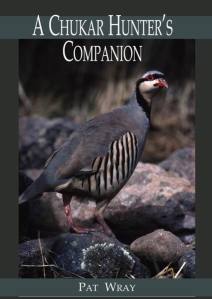
The Chukar Hunter’s Companion

There are few books written about hunting chukar, and even fewer that are really well-written by someone who has dedicated a significant portion of their life to chasing and learning about them. Maybe this is a result of the fact that the group of people who really go off the deep end of chukar obsession is pretty small to begin with. Maybe it’s because many dedicated chukar hunters, much like those who really get into chasing carp with a fly rod or mountain goats with a bow, tend to be a bit different; a hermetic lot, who feel their experience has been hard won (and rightly so) and are content to let others figure it out on their own, as they did.

It may have been the inimitable Charlie Waterman who first wrote about chasing wild chukar in the West, or at least he’s the earliest I’ve come across (if anyone knows of earlier writings, I’d love to hear about them). Buddy Levy’s “Echoes in Rimrock” is also a fine read. Other than the odd chapter on chukar in more general bird hunting books here and there, there isn’t much else, aside from Pat Wray’s definitive book, “A Chukar Hunter’s Companion.”

For practical info, “A Chukar Hunter’s Companion” is hands down the best of the lot I’ve come across. It covers everything from the cultural and natural history of the bird to considerations in planning a chukar hunt, tips for success, fine-tuning for chukar dogs, thoughts on ethics, gear choices, great recipes and more. Most importantly (well, for me, anyway…), the book is engagingly and well-written, offers great practical info based on extensive, real experience, and is full of wry observation and humor.

In addition, the book contains little gems like this;

“My friend Ed Park once told me a story about a native of the country of Lebanon, a serious chukar hunter. Commitment is pretty much required for anyone who hunts chukars more than once, but this gentleman took commitment a few rungs higher…into the heady realm of devotion. During the nearly continuous military squabbles taking place between Lebanon and Syria while he was growing up, he regularly crossed over the mountains separating the two countries to hunt chukars well into Syria. On several occasions he had to hide in the rocks to evade mounted Syrian military patrols.

When questioned about his reasoning, he said simply, “Chukar hunting was a lot better in Syria.” It is an explanation chukar hunters would understand completely.”

It also happens to be the only chukar hunting book I know of with a handy, accurate test for gauging just how bad your chukar affliction has become. Useful stuff indeed, compadres.

You can find out more and order “A Chukar Hunter’s Companion” here.

Further Proof That Hunters Just Think Different (as if you needed it)

Background: It’s been a long, wet spring in the northern Rockies, with many places over 200% of normal snowpack. It’s now mid-June, and there have been precious few days that have felt like summer to date. But rather than pining for warm summer days, we have exchanges like this:

Hunter #1: “Well, I don’t want to jump the gun, but….it’s less than three months away…”

Hunter #2: “Funny you mention that, it was the first thing that popped into my head this morning.”

Hunter #1: “Yeah, normally I don’t let myself get excited until after summer solstice.”

Hunter #2: “Take heart – the days will start getting shorter soon…”


Yeah, we’re not right in the head.

Burden of legacy

Where chickens boom in golden grass
A faithful friend and I hold mass
Set out to hunt and death impart
We find not endings, but only starts
From us, this place soon shall pass

Alone, not I, nor would I be
My dog, a friend to cherish me
In this church that is the land
I give thanks for where I stand
My companion too, a gift from thee

My thanks is required, but sufficient it is not
Life’s passion needs more than allegiance to a plot
We are called to seize our endowment, and labor
Gratitude is fair, but wild lands need our sabre
It is up to we, else this temple shall rot

Not from night, the darkness will arrive
Taking not freedom nor profit, but lives
All is not well, the chickens grow quiet
For them the end approaches, but who will riot?
Grass, bird and church, cringe from steely knives

Set it right we could, if we’d only try
Stop the rush to destruction and ourselves defy
Gather the arms and raise the guard
Hunters must rally to protect the yard
Should we not, I won’t hunt. And the dog would die

SFRED

Thunder Chicken Chronicles

It starts in February, with being notified that you’ve been lucky enough to draw a spring turkey tag for our local, limited lottery. You know people who have put in for it for years and never gotten it. For two months, you persevere through exponentially accumulating snowfall, uncharacteristially optimistic that, by late April it will mostly be gone. You spend too much time pondering the merits of various decoys and turkey calls online. Your spouse walks in on you watching an instructional video of three good ‘ol boys sitting on a porch, demonstrating calling techniques. She lifts an eyebrow as if to sardonically say, “really?” and closes the door. You feel a bit sheepish, but quickly become engrossed again in the finer points of yelping and purring.

The opening date approaches, and you start scouting. Most of this involves futilely post-holing up to your waist, and you truly begin to question why you ever thought you’d find turkeys in our valley.

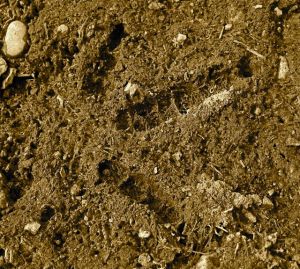
As the opening date approaches, on a walk with the dogs, it happens. Tracks. More than one bird, maybe half a dozen. Criss-crossing each other as they all travel in the same general direction up a snowy slope. You can’t believe it. It’s like coming across a canteen full of water while crossing the Mojave on foot. You follow them for half an hour up a trail, over a ridge, into the forest, and suddenly, you get that eerie feeling that you’re not alone. There they go – a flock of Merriam’s  fleeing into dark cover. You stop and let them vanish, and suddenly, it occurs to you that you just might be able to pull this off.

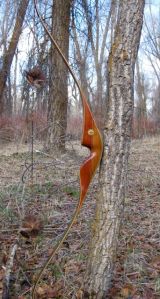
1970 Bear K-Mag

The alarm comes too soon, and it’s still dark and you wolf down a Pop Tart and a thermos of coffee and meld into the woods, bow in hand. You see a young bull elk. You spook coyotes in the steel blue of an overcast dawn. Mule deer everywhere. Sandhills sound as you hope they always will – like visitors from another planet. You are grateful for being here, so early, mixing with your elusive neighbors.

As you reach the end of the first week of your two-week tag, you realize that you have already spent over twenty-four cumulative hours in a small, dark blind – alone, staring at decoys, making no sounds other than something similar to a horny hen. There are people who would question your behavior, and reluctantly, you admit that they probably have every right to.

The time left progresses, and you see turkeys here and there, typically after you’ve just spent 4 hours hunkered and calling and you decide to pack it up and head home. A few hundred yards down the road, they run in front of your vehicle.

One day over a pint, someone asks you what you’ve been up to lately, and you tell them, fully knowing that it must sound a bit odd,

Jake Brakes

particularly as snow blows sideways past the windows of the tavern.

“There are turkeys around here?” they ask incredulously.

As your mind races through the possible responses, you find your mouth (as usual) crossing the finish line first with a simple, “Nope.”

Close Waters

It is, despite any charitable stretch of the imagination, a shithole. Plastic bags undulate like jellyfish in the tepid brown water. A thick layer of trash rings the shoreline. Thick wads of yellowed monofilament, snelled hook packages, beer cans, Styrofoam worm tubs, broken and discarded ten-dollar spincasting rods, cigarette butts, crooked sticks stuck in stinking mud, an abandoned flip-flop; the detritus of the don’t-give-a-shit demographic is everywhere. In a land where public water and open space for dog training and fishing is scarce and precious, I marvel, repulsively, at the fact that I can hardly bring my dogs here for the shiny matte of broken glass they must run over.

Last year someone dumped an old mattress and recliner in the pond. For a few months the waterlogged mattress floated aimlessly across the water. I used to aim for it when throwing marks for the dog, the bumper making a gelatinous thunk when it hit. She would climb up on the mattress, grab the bumper, briefly survey the world from her quivering ship and swim back to me. I once caught a bass from under it before it finally sunk into the filthy, inscrutable depths.

But it is the only water I have, so I fish it, throw bumpers into its water for my retriever, let my setter chase the tough, cat-wise urban quail that live on its edge. There are trade-offs to living on the plains –  the fishing, music and friends of the past for birds, solitude and unfettered horizon of present. This lack of decent water is just one of them. Someday – if the birds continue their slide and what few remain are found behind fences to which I will never be afforded a gate key – those trade-offs will become too much to bear and I will leave this place, but until then I keep coming here to fish and train. Better thin gruel than no gruel at all.

The bass I catch are pale and colorless, like most bass from muddy, turbid water, but they take a spinnerbait readily enough, and they’ve indulged my recent obsession for flyfishing by obliging me with the occasional thrill in that endeavor, despite my incompetence. As a reminder of what I’ve lost for what I’ve gained, they do their job, and as a touchstone for what keeps me sane, well, they do that, too.

So I come back here to find what comfort I can in what the water, the dogs and the bass offer, because water is water wherever it may be and as one who has always been obsessed with water, I have no choice but to seek it out when I hear its call.

While fishing here I once found a used syringe and a little black fake leather bag with traces of what the cops in the affidavits I used to read as a beat reporter always referred to as “a white powdery substance.”

I walk up to the water, look down and there it is, just lying there at my feet. I pick it up, carefully, and put it in the fake leather bag, wrap it in a McDonalds bag (there’s always a fucking McDonalds bag handy) and stuff the whole thing into the overflowing trash can at the parking area. As I walk back to the water, I think about how miserable that person’s existence must be to seek out this shitty, polluted spot and take – in such a hopeless manner – what fleeting solace they can find in this world.

I make a cast and do the same.