Scars

There is a stone wall at the bottom of the Blackmer place that runs north to south along the forest edge. In New England fashion, it is straight and true despite its age, three stones wide and another three high, a dry-laid bulwark of our native schist. The slab-handed dairyman on the place claims that the width spells it out to be the boundary of a long-forgotten garden, as the pasture walls of his forbears were built in the width of a single stone. But the garden is gone now of course, and the flint corn and squash and drying beans that once grew there have, like the farm itself, been deemed New England heirlooms. As for the wall, I dare say in the last hundred years it has contained nothing at all except a grown-over section of bittersweet tangle… and, of course, a steadfast supply of grouse and woodcock for the unlikely likes of me.

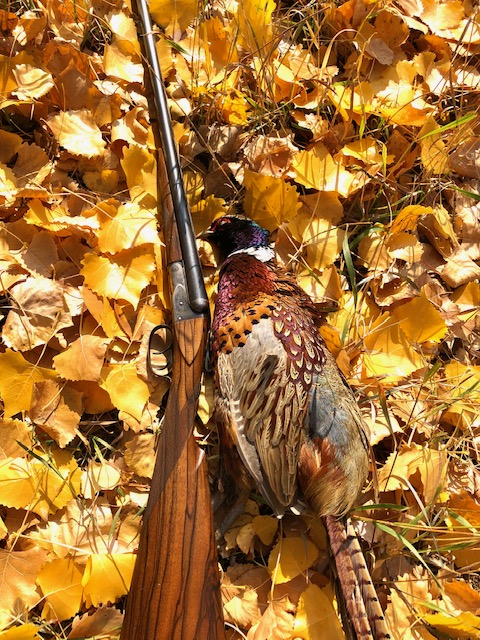
I ran my first dog along that wall in training and in earnest for the first five years I lived here, through all the seasons except summer. In fall, I carried a gun back and forth across it, teetering over the loose stones with the gun broken. The dog, who is now just ashes and memories, made his first by-god grouse point just beside it, and followed the wing-tipped bird well over the hill in the retrieve. And it was there one October day that I tripped and fell and busted my knee and put a ragged, three-inch scar into the stock wood of a treasured bird gun. I’ve never had the heart nor the money to get the gash repaired, just as I’ve yet to relegate the dog’s ashes to the loam in that place beside the wall. I suppose the jagged scar, which has darkened with years and gun oil and sweat from my hands, has grown to make the gun, and indeed the autumns themselves, somewhat more my own.

I think of scars often in that way, as things of beauty, vestiges of memory. The dog that now shares my bed tore a flap of his flank away on a barbed-wire fence when he was no but two. He never made a peep, and he kept arcing through the alder just ahead of me, and only on a woodcock point did I notice the blood on his side. I took the stitches out myself but missed one somehow, which I still feel as a rise in that half-moon of nubby flesh beneath his fur. I remember too the way the vet smiled up at me over the stainless table, a man who knew about dogs and guns and horses. “Don’t worry,” he said to me, pulling the black gut tight. “On the sporting breeds, the show judges don’t draw points against dogs marked up in the field.  In fact, I think it adds to the appeal.” True or not, I liked him all the more for saying it, though it was the least of my concerns that day or now.

Scars tell a story. Scars prove our mettle. Scars are what make old men old, and old guns heirlooms, and old dogs sore when they whimper, sound asleep, by the fire. In the annals of my New England, there is a photo of Burton Spiller, the poet laureate of the New England grouse woods, holding a cockbird by the toe before Tap Tapply, its native son.  It’s a black-and-white photo, well weathered, barely more than an etching of a time when partridge filled the forgotten corners, and the forest was re-gaining ground, and a pointing dog still had a chance on those ruffed-necked biddies of the autumn woods. Spiller is holding the bird out to Tapply, and I can only imagine and can’t quite see the little rents and tears and scuff marks that line the backs of his hands. A lifetime in the grouse woods, torn by thornapple spears and blackberry and the odd bit of fence wire. Those hands carried a gun through a land scabbing over, and healing, going dry and full to bursting with birds, while stone walls lost their purpose and became nothing more than scars themselves along the New England landscape.  And here I am now a part of it too, walking the walls where Spiller tread, where my first dog pointed a first grouse, and I tipped it barely into the remains of our forefathers garden, and he fetched it back. “Earth to earth, ashes to ashes, dust to dust” says that good book, but I say what of the scars that linger, reminding us each of the of autumn days? It’s the scars that tell the story, and fill our hearts when, as old men, they are all that we need to remind us.
I’m here to tell you

In the beginning, no one tells you about the end.

Everyone focuses on the withdrawal from the bank account and the puppy breath and the belly rubs. Maybe they tell you about crate training or share their contrived tips to get the new addition through the night without incident, but they don’t talk about the end. 

I’ve long looked at myself as a rookie in this space. Always looking, always learning, trying to glean what I can from each new experience and get better – hunting, training, handling, and loving.

As the years went on I knew the end was coming, I even played it out in my brain a few times like one of those difficult conversations you have with yourself before ever uttering a word out loud to the other person. Those never go as planned, do they? 

This didn’t either.

Don’t get me wrong, I know about death. Trust me. Lose a family member to the violence of another as a teen and you get real close with it. But, unlike most things, the loss of those you care about doesn’t get easier with practice. (If you don’t care about your dogs you probably shouldn’t be here.)

I knew it was looming out there, a storm cloud on the edge of the horizon. That kind you brush off and will elsewhere by calling the dog around and striking out to new country pretending you won’t get wet. But, gamble long enough and those clouds end up on top of you – rain was coming. There was the inevitable slow down and the gray muzzle and the stiff legs on hoar frost covered mornings.

In the time since the beginning, those I met from the onset of this four-legged following had their own ends. Ends I felt, in a different way, sure, but ends nonetheless. No more scratches behind the ears, no more ‘whoa’ and the excitement that comes after, no more times on the tailgate getting collared and no more ‘god damnit, I said here!’ when they forgot to turn it on. 

Hobbes and Bonnie went first. I hate to say that I don’t remember which had the honor of first place in the race to the end, but I do remember the sting of the texts coming through for each of them. I remember the downturned eyes and staring at the phone screen with no words to type. They don’t tell you what to say in these moments.

We had a good run after that. Half of us with dogs in their prime, and the others with up-and-comers. We got a break.

And then the break was over. One week we had to drag Tine out of a cut over full of so many woodcock he forgot his name, the next had his weathered red reflective collar buckled for the last time and placed on the dashboard. That dash still had trips on the books, waypoints across bird country to hit, as we all do when it’s only October and you have a workhorse in the kennel, a kennel now empty. Best laid plans.

Before I dropped that tailgate in April and came face to face with the end I had plans of my own. Plans of a rookie turned intermediate who is beyond the puppy years and knows the clock will wind down soon. Plans to keep the list of first places and first birds going before her brightness dimmed too much. They don’t tell you that you can’t pick when the lights go out. One more thing not going as planned.

I wish they would have pulled me aside and told me about the end, if nothing else to dull the knife of loss just a touch over a lifetime before it plunged its way home. But they don’t.

Now it’s my turn to be ‘they’.

You know what I say? 

In the end, it’s so fucking worth it.

Mouthful of Feathers lives!

The e-book is out of print. 

No one reads blogs any longer. 

No one (even us) blogs anymore. 

Instagram wants you to watch video influencers. 

Facebook wants you to shop. 

So we are doing the most punk thing we can come up with.

We are doubling down on the blog. 

We are recruiting new contributors. 

We are printing a book. 

Waving the white flag

My first gun dog, a pudelpointer I bought fresh out of grad school with almost no research into other breeds, pedigrees, or breeders, has made a wonderful family dog.  She’s gentle with our toddler, keeps my wife happy with her minimal shedding, and has been a serviceable companion both in a duck blind and in chukar country.  Her start was anything but ideal, as her early upland hunting was largely limited to planted pheasants at the wildlife refuges and pay-to-play preserves near our home in the Willamette Valley.  While I have some fond memories and glimpses of brilliance on epic retrieves and staunch points, I can’t help but feel like I failed her with a lack of time training and exposing her to the kinds of experiences that make for a solid gun dog.  As she approached her eighth birthday, my thoughts turned to the next dog that would join or family, the lessons learned and the mistakes made, and what I’d change with our next pup. 

Those thoughts all came to a head two years ago, with a much-coveted invite to join the MoF crew at a chukar camp comprised of four setters and two shorthairs in the wilds of the Great Basin.  Often described as elegant and stylish, my impression of the camp’s setters reminded me more of a Rage Against the Machine mosh pit than some old white guy in tweed and a necktie. Those dogs absolutely ripped through the sage and bitterbrush in search of birds and after five days of following them around, I was firmly sold on the English setter as my new breed of choice.  I went home and put down a deposit on a litter that shared pedigree with Tom’s Mabel.  

October Sadie May

The following November, on my second invite to the MoF annual chukar camp pilgrimage, Tom and Greg were both cool and encouraging as then five-month-old Sadie romped around without much interest in birds or scent.  “These dogs train themselves, all you’ve gotta do is take ’em hunting,” was the constant refrain back at camp as I returned time and again with an empty vest and the nervous edge of a drug addict in need of his next fix.  I couldn’t bear the thought of failing another gun dog.  With a three-year-old son and a full time job waiting for me back home, intrusive thoughts on my own ability to give Sadie the future she deserves were with me on the lonely drive home to the Willamette Valley.  

Sheepishly, last winter I began researching gun dog trainers.  Much like the feelings I’ve long harbored over guys who only fish with hired guides or pay others for home improvement projects rather than admit their skills aren’t up to the task, sending Sadie to a trainer felt like cheating.  I wavered whether or not to even tell my hunting partners of the decision I’d made.  So I wasn’t surprised by the guilt mixed with excitement that washed over me as the hood of my Ram crested over Santiam Pass en route to a mid-point visit to see Sadie, after her first five weeks at a bird dog trainer outside of Bend.  

After some small talk with the trainer, he brought Sadie out on a long lead and directed her to a couple of pigeons strewn about his training grounds in launchers. A light breeze bent the field’s tall grass as she quartered back and forth, nose held high into the wind.  As her saunter slowed and she froze, tail rising skyward, any feelings of guilt or remorse I had were far from my mind. 

I look forward to the day when I’ll have the time, space, and freedom to train a dog on my own.  Much like tying flies, reloading ammunition, or refinishing your own kitchen, there’s a sense of pride and accomplishment that comes along with figuring things out yourself.  But unlike a fly, or a shotshell, or a kitchen cabinet, there’s no do-over with a gun dog.  The choices I’ve made over the last twelve months of Sadie’s life will be with both of us for the rest of her life, and will echo across my memory until my time comes as well.

I’m kid-on-Christmas-Eve excited about the career Sadie and I will have together and I can’t wait for the lessons I’ll learn about training and companionship she has to teach me.  And as for the rash of shit I’m bound to get from the chukar camp crew, I’ll take my lumps a little easier with a few birds in the bag.  

Commemoration

There are those in the literary world to whom nostalgia and sentimentality are an anathema. There may be a point there; why look backward when forward is the thing? Why think about a time before the time we are in?

This is not my school. Mine is old. I like manual transmissions. AM radio as long as it’s tuned to mariachi or Ray Price-Marty Robbins country, no rantings of conspiracy and anger for me. Tent camping. Straight black coffee. Cast iron cookware.

And I love this old man. He turned 90 a few weeks ago. Greg and I rented a Forest Service cabin with a long view of Montana where neighbors are mountain bluebirds and barn swallows up from mariachi country. We sat on the porch of that cabin and thought about Lewis and Clark and we talked about Winchester rifles made before 1964, fly rods made by hand, canvas tents, bonafide American double guns. We watched skeins of elk and antelope work across sagebrush benches greening in a May sun. Saw a black bear galloping across cattle country and a snowshoe hare going white to gray.

“Greg, I’ve turned into a stumbling, drooling old man,” he said.

“You’re not drooling.”

“Not yet.”

He stopped himself at one gin and tonic and I said, “I understand.”

“I don’t,” he said. And then he said, “Stop me if I’ve told you this before.”

He had, but we didn’t. He has stories, nostalgia, sentiment for days gone by. So do we.

Poor is the one who does not listen to this, stealing gems from one’s own cache. Bring it on.

Jim and Greg doing a little target shooting with an old school Winchester 1890 .22 WRF.

Evidence of interlopers

On the tailgate of a pickup covered in the grime of four states, I pull out my boots and lace them while Tom buys green chile cheeseburgers at Blake’s Lottaburger.

It was a long drive through the night. A February snow hammered us for 300 miles from Utah until we drove out of it near Albuquerque at daybreak. The mid-day desert air is warmer than I have felt in a month, but when I pull on the boots they are still full of cold, Northern Rockies air.

There are a handful of chukar feathers stuck in the laces, a remnant of a last day Idaho hunt. I pick them off and watch them flutter across the parking lot and catch in the grass at the edge. I wonder if some other rig packed with bird dogs and desperate for a green chili fix. Will they raise an eyebrow? Will they get a chuckle? Or will they think, “go home you miserable spot stealing bastards!”

I hope it’s the latter.

Big news from Mouthful of Feathers

Mouthful of Feathers lives!

There is new content on the way.

And we have even bigger news to announce in the coming weeks.

Stay tuned

Letter to Lucy Gray

I don’t even know what a Godfather does. I have a vague idea and I think there may be presents involved. I could ask around, get some thoughts on what other people think it should be, but I kind of like having a blank canvas to make it up as we go along.

Your Dad came up to Montana this summer to ride and camp with me and that’s when he asked me if I’d be your Godfather. He said he and your Mom had talked it over and it seemed right. I laughed it off, but I also have got to tell you, it brought tears to my eyes. The honor of it. We were heading up into the West Pioneers on a four-day horsepacking trip, your Dad riding my old mare, Mac, me on Black Jack, and my new young filly, Sis, carrying our food and a bottle of good Irish whisky. We got rained on, caught some fish, shared that bottle, and had lots of good laughs. In the mornings, when it was quiet and we fed twigs into old coals and watched flame rise in the campfire, I thought about what it means to be a Godfather. To have someone I’m going to watch grow up and turn into a young woman.

This morning, your morning, I hiked out to my upper pasture, caught old Mac and rode her bareback to the house. I didn’t know you had been born, but already in my head, I was thinking about what I might say to you. What I might teach you. Is there something an old bachelor can teach a little girl? Some lesson? Some way of going? What do I know of raising children with no experience of my own?

It’s horseshoe time again. Hunting season is on me and there’s a wind off the Tobacco Roots pushing leaves off the cottonwoods, telling me it’s here, and so I caught Mac and let Jack and Sis run loose, bringing them down to the barn to meet the farrier. In the stirred up wind, the horses skittered. I swung up on old Mac with just a halter, and she pranced and threatened to run with the other two and I thought to myself, “I’m getting too old for this crap.” As the other two galloped off in the loose wind, I worried that I might find myself on top of my head, but pride kept me up there even though she jigged and jogged and threatened to tip me off. She defies her age and I’m at the age when I deny mine.

When I got back to the house, there was a message from your Dad that you had been born. And so you are here, Lucy Gray. A new soul in a complicated world. I’m a new Godfather in that same world. And here are my first words to you: Get outside, find the passion in your life, love someone, and throw yourself at it.

There’s a solace in nature that you’ll find just by putting yourself there. I know your parents will take you into the mountains and desert and open plains and you’ll find that peace. You will learn to ski and ride a bike and a horse. You’ll learn to row a boat down a beautiful river, cast a fly to a rising trout, eat wild raspberries right off the stem.

It’s a wonderful life, this life spent outside. When life is troubling you, go there. Learn the wildflowers, know the birds, the insects. Listen. Grow a garden. Eat farm eggs and elk steak. We live life in a world of machines, but our true nature is nature. This is where our species has evolved, in a world that is dangerous and exciting, a world beyond our inventions. Breathe in that clean air. Get outside.

There will come a time in your life when it will seem as if stress is all you are swimming in. It is at this moment when you will need to open the door and step out into it. Away from the indoor pressures into a space big enough to wash it all away. Get on a horse. Put on some hiking boots. Pick up a fly rod. Get away. Get out.

I’ve been lucky in my life, for my passion is the outdoors, and the outdoors is my work. But there are many other passions. Find yours. Most of all, have fun. We only get one of these things called life. It’s not a dress rehearsal. Find something that you love to do and do it often. Find something worth fighting for and fight for it. Stand up for people and creatures that can’t stand up for themselves. Argue for your beliefs, but be civil about it. Try to see both sides, for that way you’ll be able to understand others and your convictions will be all the more firm for that understanding. But more than anything, have fun. Enjoy it.

Your life is going to be filled with many great people, people you’ll love deeply and without condition. Good people, starting with your parents and spreading out from there. You are born into goodness, with rich souls all around you. You’ll meet many and you’ll know, by looking into their eyes, the depth of their goodness. Love them. Love animals the same way and watch how others treat their fellows and how they treat animals. You can do a lot of weeding if your own eyes are open.

Finally, go at it hard. If the road is rocky, take it. If it’s tough and hard and difficult, it’s worth doing. If it were easy, anybody could do it. No man has made a good name for himself by taking the easy way out. No matter how much it sucks, suck it up.

And so there it is. Get outside, be passionate about it, love well, and work hard.

And always remember, if you need help in this world, if you need someone to protect you and love you and help you fight the fight, he lives in Montana and runs a string of great bird dogs and rides cranky old mares bareback.

Welcome to the world, Lucy Gray.

________________________

First published in Wyoming Wildlife magazine and then in the book, Give Me Mountains For My Horses, Lucy Gray is now twelve years old, the old horse Mac has gone to the other side of the ridge and the author has children of his own.

Gunfight In Our Birdcamp

His hat lies on the floor of the old house. A narrow ray of sunlight crawls through a hole in the roof and illuminates the tattered carpet a few inches away. The hat once was sharp and bold; black with big gold letters and those striking wings on the bill that us kids called “scrambled eggs.” But my Grandpa Clarence died years ago and his old cap is now tired and gray from accumulating dust. A mouse emerges from beneath the crown and scurries away through the rubbish of the crumbling bedroom in the once-vibrant Kansas farmhouse.

As a boy, I spent countless days in this home with my grandparents. On special occasions, I would travel with Grandpa from the red and white house as he proudly wore that NRA cap to church potlucks and community barbecues. By the time I was in high school, I could spot him in the crowds of my ball games by those three big gold letters. 

Grandpa survived the dust bowl, the great depression, and WWII. Dignified but never ostentatious, he was a dedicated FDR Democrat who believed the shared sacrifice and self imposed decency of his generation had saved democracy. That NRA cap had a very specific meaning to him; it was an extension of his patriotism. 

His hat signified responsibility, solidarity, pride, and family; all things I experienced with him as a boy. After enough of my begging, he would agree to jump in an old pickup truck and bounce down a dirt road until we arrived at a ditch where he knew pheasants lived. We spent the better parts of fall days together, me with a borrowed gun from my dad and Grandpa with his prized Model 31 Remington 12 gauge. I remember the soft fall light pouring over us as we took aim at the birds and then laughed together about shots made and missed. 

Those old romantic days of Americana with my grandfather are now gone. Where there was once a lawn and a home and a family, there is now a head-high forest of kosha and thistle. There are pheasants scurrying through those weeds in the decaying homestead, and I take aim at roosters flying over the bedroom where the old NRA cap lies sad and forgotten. 

I make a good shot on a bright, long-tailed bird and it lands with a thud near the foundation of what is left of the house. My grandpa would have been proud of that shot, but I am glad he did not live to see the things that his once-proud hat now signifies. 

I am sad for him. So much has changed. Like his favorite hat, he was proud of me in his own quiet way. In his later years he beamed as he told friends that his grandson was a bigshot at a gun company. He kept a catalog from that company to show off what I did. It’s probably in the house now with the old hat and the dust and the mice. 

I was proud too. Back then neither of us had the perspective to see what was happening. As Grandpa neared the end of his life, about the time I was winning awards in the gun business, the memories, pride and idealism signified by his cap were already being twisted into a political machine that Grandpa would have wanted nothing to do with.

Eventually I would be a part of an industry that was doing things he would not have been proud of. For a while I was too close to see it, and as Grandpa faded, he was too far away. I suppose there are blessings in the blind ambition of youth and in the calm ignorance of old age. But there are dangers too, and I hope that our country is neither too close nor too far away now.

People like us bird hunting vagabonds, those of us who read and write on this assemblage of words and images, are almost all romantics. We want to believe things are true, we hope the country is not changing, we want to remember our old hats as crisp, proud and righteous.  

But not everything is as we wish it to be. The blind romance and passion of people like us is often the very fuel for the mechanized forces that eat away the old homesteads and favorite memories of our lives. I spent decades inside that powerful machine, I fed it, learned how it worked and tried to maneuver within it. Sadly, I came to understand it had used people like my grandpa and me. 

Coming to terms with this reality has not been easy. Writing my memoir has not been easy. Dealing with the truth of a deeply divided country has not been easy. Knowing that my grandpa’s hat is lying in that hold house has not been easy. Challenging what some of you believe will not be easy.

Shooting cackling pheasants over the old Kansas bedroom was, truth be told, pretty easy.  

The words I have offered to my Mouthful Of Feathers colleagues and readers have always been honest. I have always appreciated the depth of this audience. The words I write in my forthcoming book are also honest. The truth is that there is a gunfight in our national bird camp and I have written a book about it all. It’s going to be controversial. Some of you will be prone to dismiss it before you read. 

But just like everything else we write here, I ask that you give this story a fair shake. Because in the end, this book is about all of you too. This is about our country, about how we ended up in a place where half of America hates the other half. 

Just days ago I received notice that Gunfight has been named as a prestigious top ten most anticipated book for the fall of 2021, so someone thinks this is going to be important. But the audience of MOF means a lot to me and I hope that the book can live up to your expectations. 

Thank you for allowing me to share words about things we cherish. I invite you to preorder this book, to read it in October and to think about our old hats and the parts each of us play in our great American story. 

We are all characters in this one.

Learn about the book and preorder here:  www.ryanbusseauthor.com

Getting off on the right foot

“I should shoot you.” 

I said it as flat and cold as I could. 

The view was nice up here, and while I may have been pleased to be at the top, I wasn’t feeling it yet. About five minutes prior, I had been skirting a hill in chukar country. I’d showed up to camp about an hour before, having driven through part of the night in a snowstorm and laid up short of camp to avoid rousting everyone at 2 a.m. I had driven into camp at sunrise, a little delirious and feeling like Gandalf arriving at dawn on the third day. In truth, I showed up a couple of days after camp had started with my covid 15 packed into my shirt.  

That first morning, my three companions headed in other directions and I lit out into the wilds low on sleep, overweight and needing to get my chukar legs under me. I took the low road, moving west, skirting the big hill. I’d let loose Maggie – the big running young setter – based on some logic that seemed sound at the time, but fails me now that I try and recall the rationale. I started moving, cold still, knowing I’d would warm eventually. Maggie swung wide into the flat off to our west as I trudged north. I was optimistic that she might find a covey of huns in the lowlands, and I felt soft at the wish. Maggie had other ideas. She swung north, then made a great sweeping arc all the way to my right, climbing the hill I had avoided, disappearing over the skyline, still climbing at a dead run.

I turned northeast, following her on the path of least resistance, climbing, but at a gentle pace. And then she stopped. The Garmin said she was pointing, 425 yards. Straight uphill. 

Days later, my chukar legs under me and the first day’s trepidation gone, I would think back to this moment. Heart hammering, a messy jog hampered by 8 months of covid fat hanging on me a like an anchor, but climbing like a mad man. Sweating, panting, slipping on the snow and ice-covered scree. Occasionally calling out a feeble, whispered “good girl, whoa”, mostly for myself. Narrowing the gap, 300 yards, 200, navigate around a basalt rim, 100 yards, almost to the top, “where is she?” Then 50 yards, at the summit. And she’s moving. She comes right to me, happy as only a bird dog afield can be. 

I look around desperately to see if I can find the birds flying and maybe mark them down. Instead, I see Tom. Laughing. Giggling like a child who has just played the greatest joke of all time, holding the little setter by the collar, patiently petting her as I scrambled and raced uphill. 

“I should shoot you.” 

I said it as flat and cold as I could. 

But came out more like, “I…” followed by gasping and retching, “I… should,” more gasping, wheezing, and sweating. “I… should… shoot… you.” 

I was pissed and not yet in the mood to laugh about it. But even if I had been pulled there involuntarily, I was at the top of this little hill, now in chukar country for real. To the east, a mountain range loomed another 2,500 feet up and ahead of us was a dry creek and another hill. Down, then up again. Vertical gained, vertical lost. And if you want to kill chukar, you have to be casual about it. Birds climb up and fly down. Get used to it. When you find them, you chase them. 

Tom managed to slow the giggling to a smirk.

Sorry buddy. I had to do it,” he said. “You want to hunt together?” 

We dropped down into the creek bed and started upward again.

The first day in chukar camp is always tough. Particularly after a year like this one. But you have to start climbing eventually, and truthfully, it’s not exactly the Himalayas. It’s more of a mind game than anything. You just have to steel yourself and go right at it. As the trip wound down, I regained my sense of humor and told the rest of the crew the story. On reflection after days of non-stop climbing, maybe I even owe Tom for getting me off on the right foot on that first morning.

Yep, I definitely owe him. I’ll have to do something nice to repay him next season.