Four–aka Taking Duke

The day my friend died.

That day is on the list–you know, the list we all pack around. The personal list of the days that sink into your core, the days you will remember for a long, long time. Days like 9/11 and the day the Broncos won the Super Bowl for the first time. Bad and good. Burned deep. Days to remember when you are old and worn and pooing in your own britches and eating soft food.

So the day my friend died. Here’s another one–the day his family asked me to take his dog.
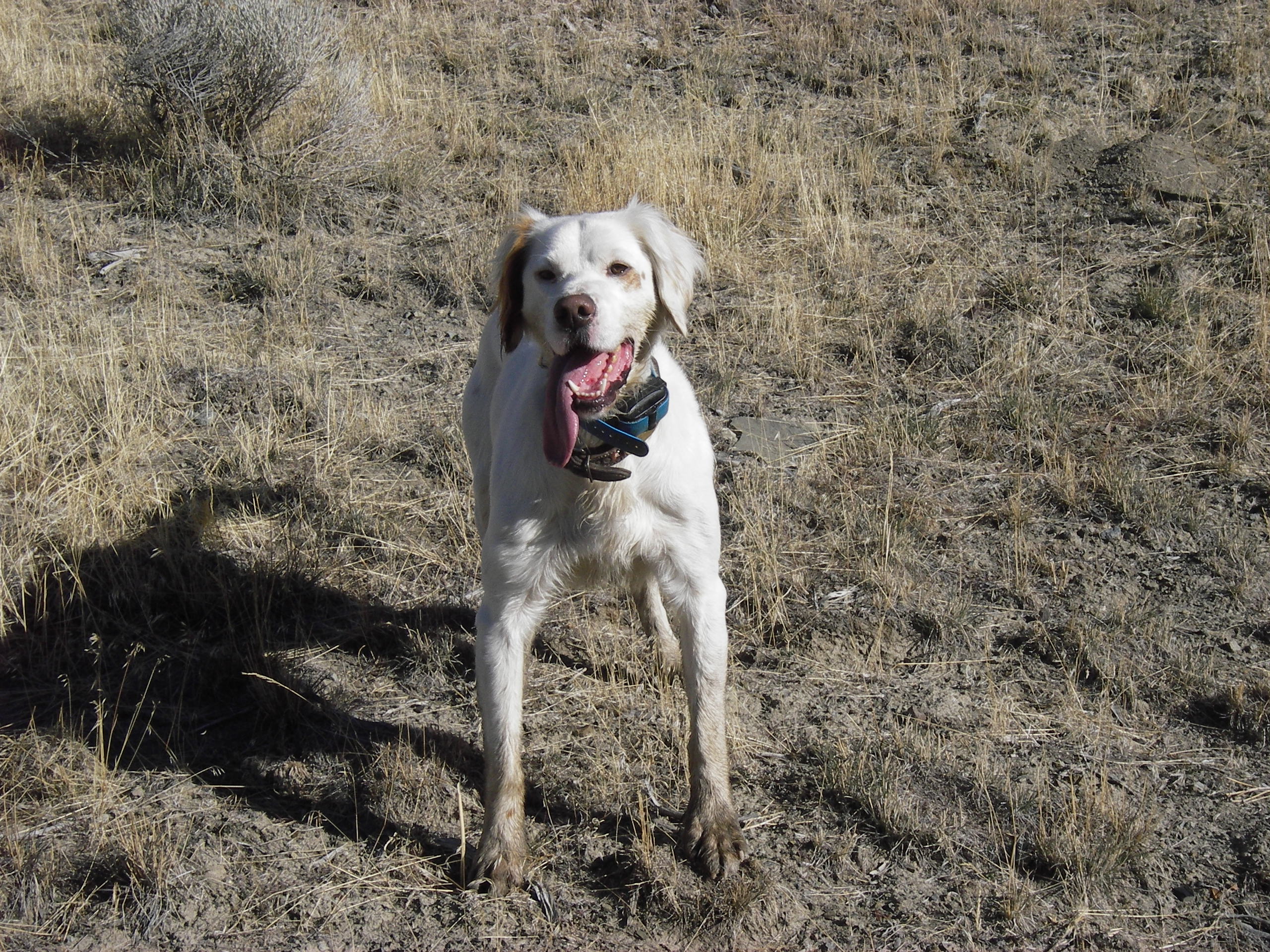
His name–the dog’s–is Duke. My friend had three dogs, two Brittanies and a setter. I’m a setter man.

“Would you maybe take him, Tom?,” Dave asked. “Dad would have wanted you to have him. He needs to be hunted.”

I gulped and goosebumped. “I’d be honored.”

Three were already at home, a team of setters that sweep the country and miss little. A fourth? Really? A fourth? There would be no bird safe from here to Great Falls with that kind of canine vacuum power. Four? I gave it about three minutes’ thought. Yes, four. I’d do it for my friend, but I’d do it for Duke too.

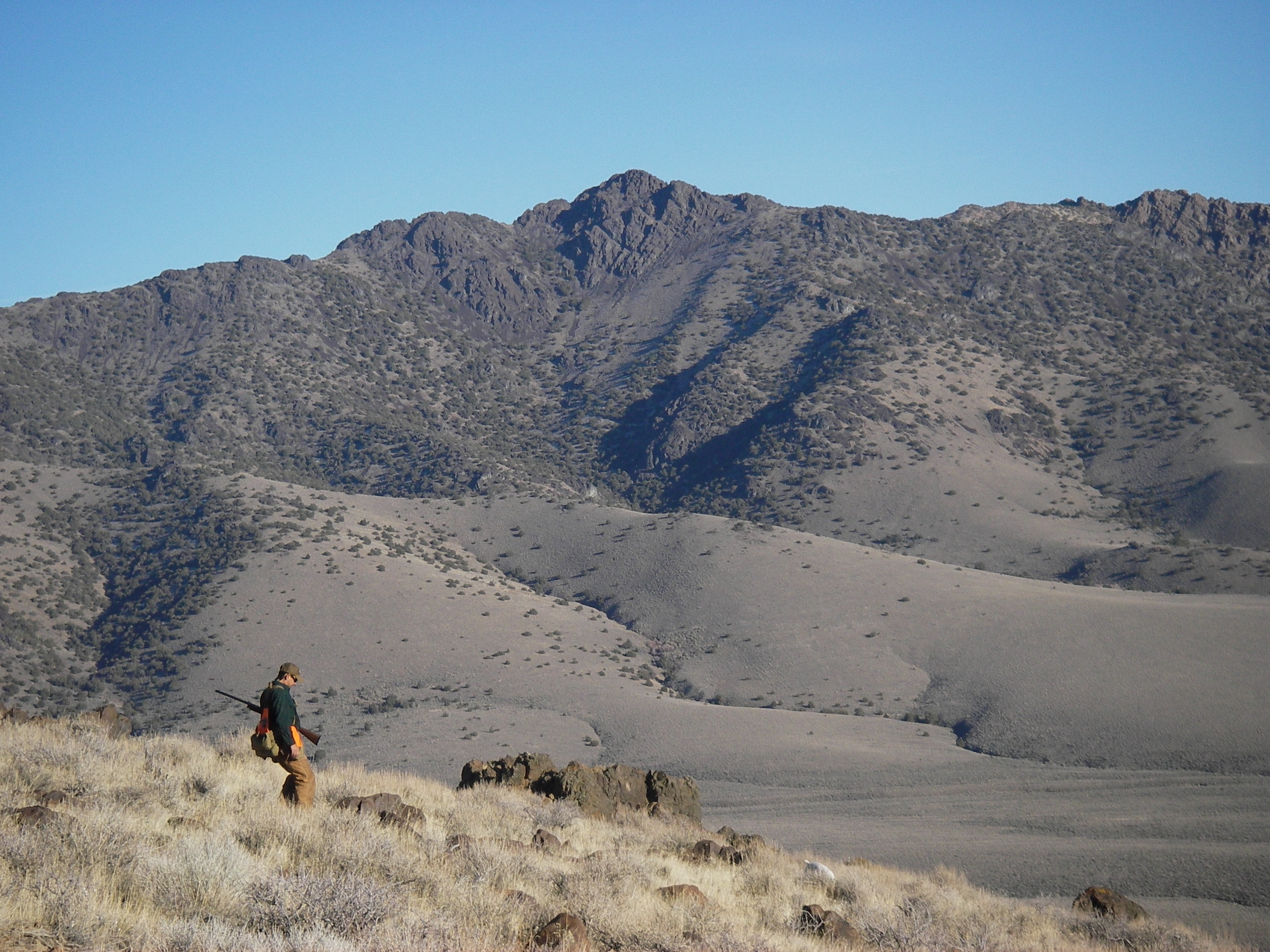
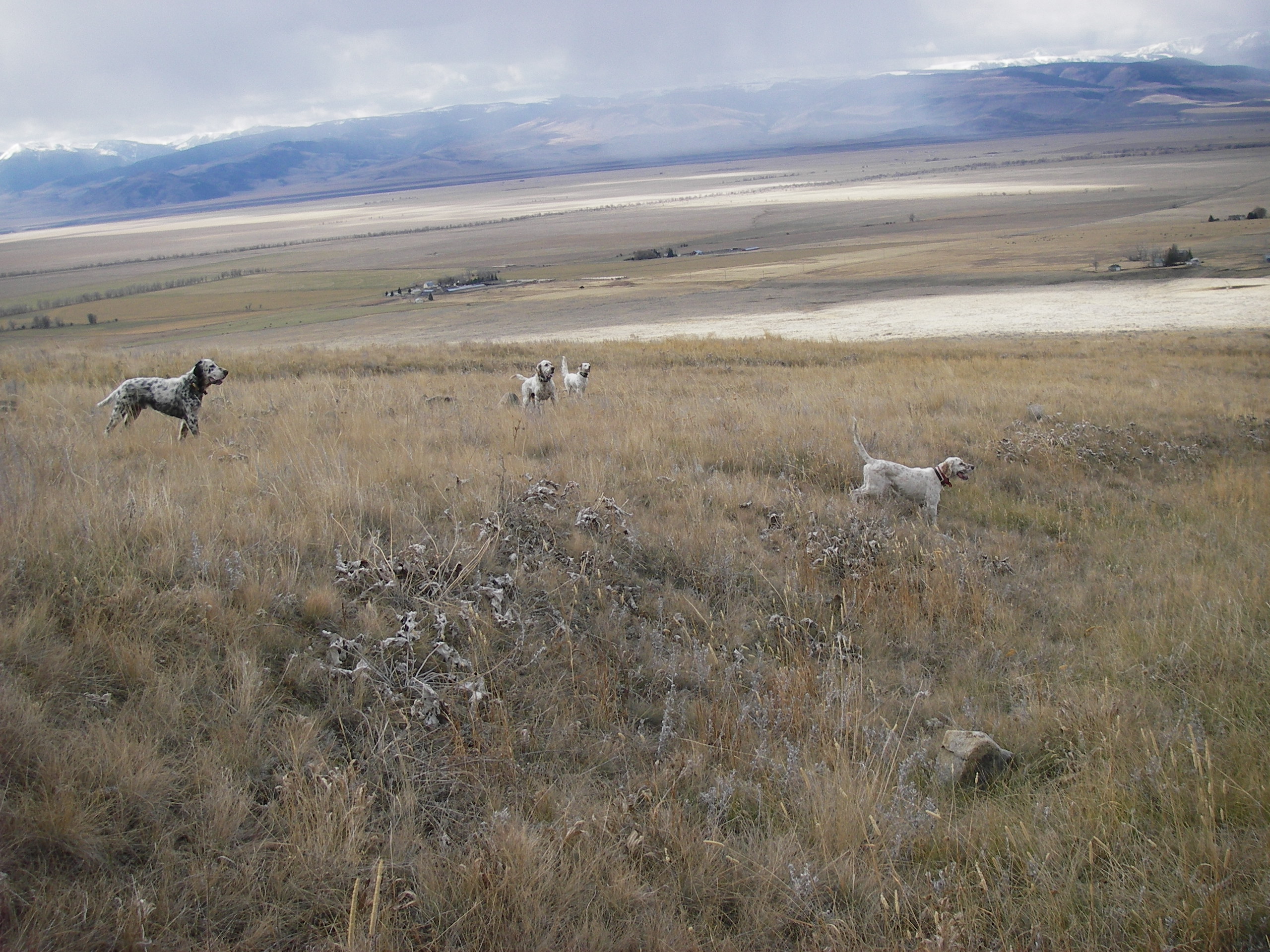
He came home with me in October, a thin high October with filtered light from the sky and a vast stretch of partridge prairie out before me. He was out of shape and a little overweight, which for a setter is about one pound. But he had fire. I had seen him hunt and I knew it was there and that he’d burn hot and long and get it done. And so it was and then all four dogs were out on the ground–a huge canvas of grays and browns and four white setters dancing across it like notes on sheet music. Glory.

They swept out into a southward Montana wind and spun in it. The original three following each other and swapping leads and going cautious when birdy. Why would I screw that kind of a trio up with a fourth? And then I saw him, off left.

Tail high noon. Stunned. Stopped cold. The trio did not see him and I loped his way and called to them and then they saw him and all three honored, then one moved ahead, stealing the point. Poor form. I spoke and she stopped then and there it was–four frozen. The frozen four.

The covey went up and the shotgun barked and a hun was there. Down and Duke on it.

My friend smiled.                                                                                       –TR
Generations

In camp and around the house, he is a big loveable goofy bastard.

Right now, though, he’s on point and it is as classic a point as a setter man in a life of setters is likely to see. He is white and handsome and up against the skyline behind a juniper and frozen. Solid. A salt pillar.

One covey back, he had pointed and then broke with the shit-hell expression of a pup on his mug, flushing birds like playing cards shot into a stiff wind. Rotten sonofabitch, with a smile.


This time, I tell him “hold, buddy” (one does not command this dog, one converses with) and stumble-skip across mean footing and see the covey.
They go up in a flurry of gray wing and clown’s mask and I swing carefully and pull the trigger and one goes down. I do not think about a triple or even a double. One is enough, one good chukar after one good point.
His name is Echo and he’s here on the mountain with me as a partner, not as a dog doing the work for a walking man. For the most part I am not in that run-and-blast, stagger-and-fall, curse-and-bleed rant that is chukar hunting in on-end country. Instead I am largely lost in thought. Soaking. Absorbing. I’m all in.
His real name is Greylock’s Hank’s Echo. Greylock is a good kennel back east, but this dog is a western lad. It’s the “Hank’s Echo” that is the important thing.
Sage and juniper and greasewood run through his veins. Hank was his grandfather and in this country of echoes on rimrock, Echo is his echo.


A decade before, I climbed the same hill with Hank–a dog all bones and balls–and we shot chukar left and right and Hank pinned them all and brought them all to hand. In the cooling light of a northern Nevada day going away, we walked down to the truck one thousand feet below, Hank at my side and the warmth of a half dozen chukar dead against the small of back. The caprock across the valley splashed pink then gold-red and then it was gone and the chill of December was on me.
A decade gone by and a bird dog buried at the base of a chukar cliff in another state, a place where chukar walk across his grave and his name is carved in soft yellow sandstone above. Now his grandson at my heel, then cast out into the thick of it–the old cold lava, the junipers, the sage, the cheatgrass greening in December sunlight and a fresh-dead partridge in that same frayed-by-years bird vest. Dead and warm against the small of my back and a honed-hard, bones-and-balls white setter out in it, after them.


The third generation hunter after perhaps the fifth or sixth generation quarry. Life ticks on.                                                                                 –TR

Leave. Please.

Another lonely morning in the treestand. A gray, late-arriving November morning completely devoid of deer. Only the red squirrels scurrying in the leaves puncture the far-off soundtrack of commuters heading to work.

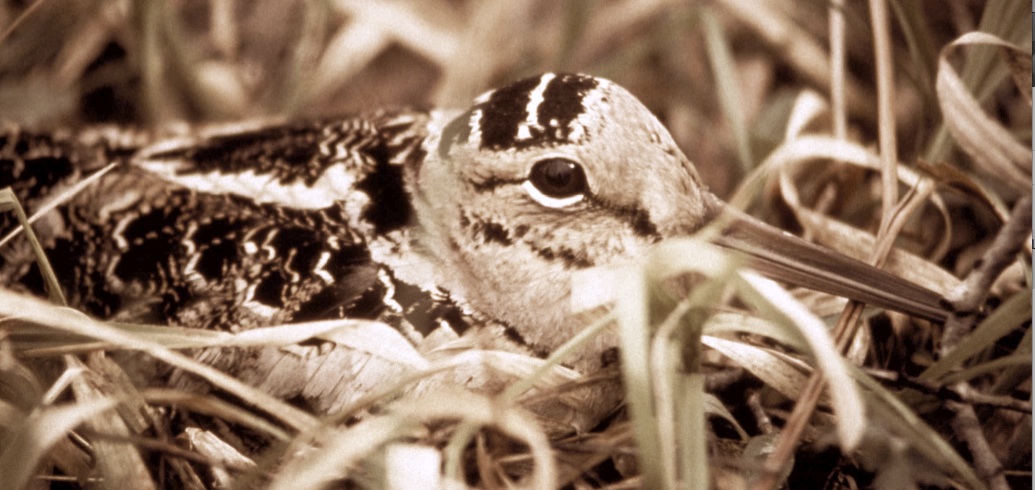
I unload the .308, climb down, stretch the back and ready myself for my re-entry into the gotta-get-to-work crowd. Thirty yards from the stand, in a mix of dogwood and aspen saplings, I almost step on a lone woodcock. The color of a potato or a good beer. About the same size, too. It startles me, but I recover in time to playfully bring the empty rifle up to the shoulder and swing.

“Bang,” I say.

The season closed more than three weeks ago on these birds – little long-billed, worm-eating, tight-sitting, upside-down-brained migratory things. This one, I’m guessing, hatched in eastern Quebec and is on its way to, I don’t know, Virginia, maybe. North Carolina? Whatever. It should be there by now. We’ve had hard frosts. Snow is in the forecast. I’m awaiting snow for tracking deer and for making turns in the mountains. Everybody’s lighting woodstoves and furnaces. These are not the days for woodcock to be hanging around, although the weather dudes say we’re in something like the fifth warmest November on record.

Empathy is my first reaction, but then I remember not to doubt the acumen of nature, the insight of evolution. If this woodcock is tardy in arriving to its winter destination, there must be a solid, reasoned explanation. Not that I’m going to get it, or frankly, do I deserve it. I’ve guessed wrong about things woodcock too often in the past to develop any kind of logical rubric.

Maybe that’s the allure: not knowing, not understanding. If we figured it all out, if the answers were too easy, then the whole thing would be a sham – us in the driver’s seat of nature.

We wouldn’t want that.

MC

The Borderline

Pour me a drink from the bottle
And one for you
’cause we’re empty as the desert
As we drift from west to east
On the borderline everything is empty, even you and I…”

– “Borderline,” by Camper van Beethoven

We hunt the fringes, the transitions, the anomalies. We gravitate to this without much conscious thought; pulled to these points at the extremity of an amorphous compass by the lodestone of experience. You could say we’re merely following the dog, but there is more to it than that. The dog is pulled to these places as the birds are pulled as we are pulled – the collision of impulse and instinct between three separate species.

Why will we repeatedly cross an otherwise featureless field, drawn to a small rise that hosts a few sage, dragged along primarily by hope? There are the obvious reasons, of course – the fact that this negligible bump on the landscape gives a vantage point for the birds and possibly a slightly greater variety of feed, would be sound reasoning, but doesn’t account for all of it. Then there are the old hedgerows, the messy perimeter of the errant orchard, the sweeping line of scrub oak, the rocky edge of the bluff; all of them places that hold birds, all of them liminal zones of portent, possessed with a deeper significance if we care to stop and think about it.

These peripheries have an irresistible, innate pull, something hardwired into the collective limbic network we tap into when we take a shotgun and a dog in the field. It is something that gets at our soul and provides a glimpse of insight into this odd thing we love. Our pursuit, after all, doesn’t really stand up to much logic. From a simple, meat-gathering point of view, it is a net loss – we expend a great deal more energy than we ever hope to take in at the end of the day. But we do it anyway, and we have all sorts of other reasons that we tell ourselves; to simply get out in the great outdoors, to watch the dogs work, to keep one foot in the door of what it means to kill and procure your own food; all of them undeniably true.

Yet we’re fooling ourselves if we aren’t also aware that as an upland clan, we are a fringe unto ourselves, occupying but a small sub-group of an already minor segment in our society, comprised of those that still hunt. And thus, as much as we are drawn to these fringe places for the obvious, we also go there for reasons that reflect who we ultimately are. We are of the peripheral, stalking the transitional, drifting west to east along the borderline…

– Smithhammer