Coverage

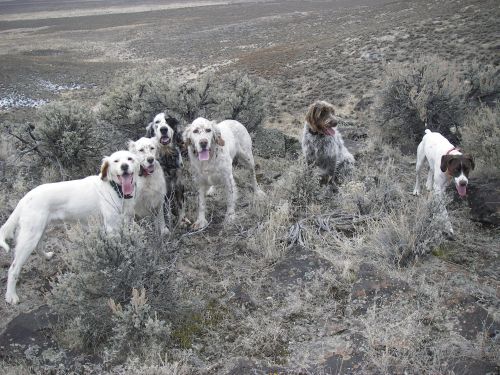
We do this dance each year and not often enough: a trio of gaited fast-moving horses, a brace of gun dogs, a sprawl of wide country. Shotguns in scabbards, bird dogs out in it, horses mounted. We ride.


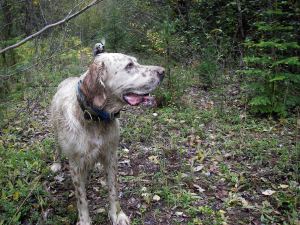
The first point is right near the truck and trailer and she is on them, with her male partner backing. She is always on them first, it seems. Ninety-five percent of the time, it is the female, that rare talent. And when she doesn’t find them first, she always honors, always. But to the first covey, a burst of Huns and a bark of shotgun. Over the next hill they flew and after the shots, we mount again and ride over that hill, searching blind.
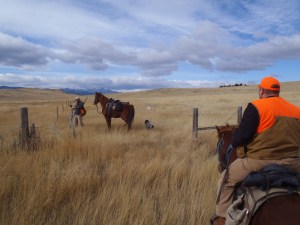

Where did they go? They were cupping their wings like teal stooping to decoy when last we saw them, but where they went, we do not know.

We grid the grass, sweeping one way, then another, for horseback your energy does not get exhausted by the endless plod of boot. Instead, you can cover the country, turn back, and cover it all again. And there they are: the covey and this time it is your turn to watch and hold the horses and the shotgun barks again.
You decide to find another covey, giving this one a break, for you have taken enough and one must always leave some “for seed.”
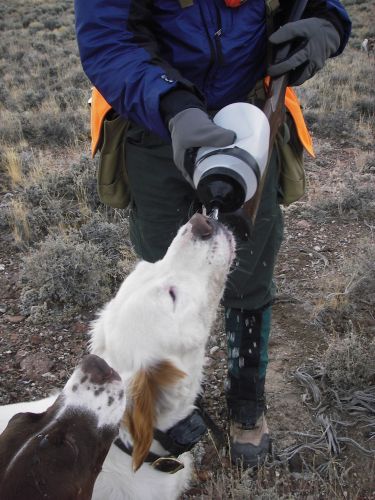
So you ride. In your saddlebags you carry old orange juice jugs filled with water and you stop occasionally and water hard-panting canines and then you ride on. The dogs vacuum up the country, running big, running hard and you cover it all and then there’s another point, and it’s your turn to shoot.
“Here give me the reins.”
And you walk in, loading the gun and moving to the point and the birds get up and you single one out and pull the trigger, then move to another as that one falls and then it’s “Dead bird. Dead bird.”
The dogs find the birds and bring them in and you mount again and find a new covey.

As the day draws down and the dogs with it, you have found four big coveys over a reach of wide ground that it would take you two days to hike across. Afoot, you would maybe run one covey down and then be done, spent. Ahorseback, and you are fresh.

You are out of dog though, for their lope has slowed to trot and their range has gone from the horizon to just a few hundred yards. Except for her. She keeps going. Somehow. How?

Drive. A lust for the wide open. A beckoning to know what is over the next hill. A whispered promise of game before bird dog and joie de vivre. That is how.

The Quiet Road

Sun tipping west and another day done.

Evening is the quiet road. The hunt is squeezed by daylight, the ridge has been climbed in a frenzy of pumping heart and heaving lung. The shotgun has barked, once, twice. Fresh dog work for the young Griffon, old hat for the tottering legs-wobbling grayed setter. A single blue grouse lies warm against your back and shooting light is slipping by. You turn, head down the mountain, chasing the fading sun. An elk chortles off in the timber, undaunted by the sound of shotgun and whistle, dog-holler and grouse-burst. Poisoned by lust, judgment suspect.
Down the ridge now, dead bird and fading sunlight, down past all of that hard hurried late-afternoon work, down to cold beer. Another day is down, another day in this best of all the best.

—TR

Setters in the mist

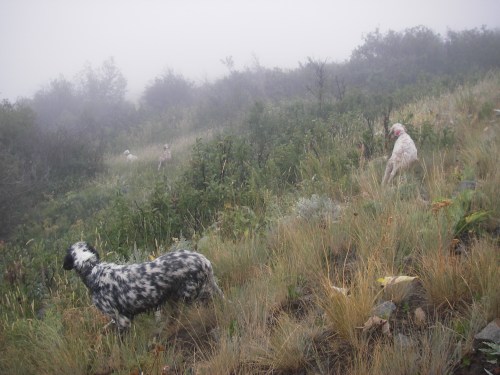
Pre-dawn rise. Collars charged, canine chargers kenneled in the pickup. Black sky and drizzle. Fog. All four released into tall grass and ripening berry. Fur wet through to skin. Running hard and hunting as if it were the last day of the season instead of the first. All four into the mist of this first day of the best month of the year. Pause now, lead dog pointing, others backing. Walk in. Five birds rise. Autoloader: three raspy barks. Three young grouse fall. It doesn’t, it can’t, get any better. No way, no how. Not even with dry feet.

Here’s to the . . .

. . . warm motel rooms

. . . home-cooked meals

. . .  local watering holes

. . . rural day-spas

. . . comrades in arms

. . . the scent of the quarry

. . . the thrills

. . . the cool refreshing beverages

. . . the tipsy-taxi cabs

. . . the hunting camp love

. . . the Mouths-Full-Of-Feathers

. . . and the hunt itself. Bring it!

Get here already

September woods await.

It was cool this morning when I walked the dogs down by the creek. Cool enough for a fleece, cool enough to fire the engine in anticipation of another season.

On this, the last best month of summer, I find my thoughts drifting. Drifting to the next month, the best shortest month of the year. Screw February. February needs to be short. September needs to be twice as long.

I walk these mornings with steaming mug in one hand and watch the herd swing out into yellowing grass and I pause at the bridge over the crick and peer into clear water for little brown trout scattering from shadow. I walk out and talk to the horses and the dogs dig mice and point sparrows and then I walk back to the house and go to work. But my thoughts drift again.

Drift to elk bugling from black timber. Drift to blues rising before the gun, thundering from chokecherry and alder. Drift to grasshoppers–real and imitation–bobbing on current, right next to the bank. Drift to perfect precision cast, drift to the list of things to do yet, before that bright day on the first of the shortest best month of the year.

Most of my winter’s firewood is still up in the hills, baking in August heat, waiting to be felled and blocked and hefted into the old F250. Most of my fishing is here in these few wilting weeks of the best month of summer. Why, I ask myself, do I wait to get firewood in August? Panic sets in and I run to the hills in the evenings with a chainsaw. Why didn’t I do this in June? It was raining then, I guess. So I sweat through it, itchy with wood chip and bug bite. Sweat now while I must, for in only a few weeks, there cannot be work to do when a shotgun needs exercise.

During my lunch hour now, I shoot my bow. A dozen shots. Then I go back inside to the computer. In the mornings, after the walk, I unload last night’s firewood haul before the sitting at the computer for the day. During the day, I take breaks and unload some more and by quitting time, the old truck is empty and I can drive up to the mountains and haul out another load. Repeat. Routines.

Tonight, I’ll take an evening off and float a stretch of the river with a good friend and a box of hoppers. The imitation kind, not the Nick Adams tobacco-juice spitting kind.

Then it will come again, the panic of a coming season and the need to be out in the woods or on the open flanks of Montana autumn with a shotgun or a bow or a rifle or a fly rod instead of up in the woods with a chainsaw and some bar oil. The goal is to have it all in, all up in the woodshed before that shining day. It is a sin of the lowest order to be working in the woods when the dogs are stuck in the kennel and the season is open, I think. Do it in August, even if that means missing some fishing. Do it now before September because when that month comes, you need to go. Do it now. These last weeks of a good summer, dwindling and too short in themselves. I waft between get-here-already and shit-not-yet.

Such it is.

–TR

Homestead Rhubarb

In the autumn, you dream of Huns bursting from the rubble that was the old milk house, and you carry your shotgun cradled ready. You follow the dogs, and they follow their noses.
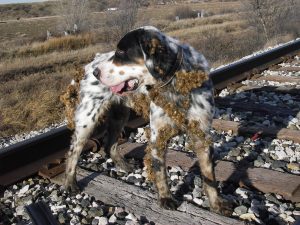
But now the land is sharp green from rains that don’t seem to quit and when you go, you don’t follow the dogs, they follow you, and they don’t pick up scent, they pick up the bothersome beggars’ ticks burs from last years dried stalks of houndstongue. You go where you want and sometimes, you walk among the old buildings and think about a different time, a different era.

There’s a hand-dug well and fifteen feet down, water. It is rock-lined and covered with rotting timbers. Peering down into those depths gives a tremor in your soul. A dark, wet, fearsome cavern. You think about being down in there, digging the damned thing by hand, and placing each one of those rocks. You think about the darkness, but then you look up and above, is freedom. Above, sky. Lots of sky.

Once, you ran into the old man whose grandparents homesteaded the place. 1898. Part of the Desert Land Act of 1877 which quadrupled the Homestead Act’s woeful 160 acres to 640 if you could irrigate the place within three years. Up on the mountain, you have seen the evidence of this – old dams and a series of ditches dug by hand and a walk-behind plow. Tough men. Tough women. Tough horses. Grandpa died in 1919 and Grandma in 1932. The old place was burned down by teenagers on a lark before the Second World War.

In this early summer in this new century, before the cows come out on the land and before the grass really comes, you ride your best saddle gelding and fix fence to keep the cows in and the neighbor’s cows out. You ride and you think of homesteaders because it’s too early to think about Huns and when they start pairing up, you quit bringing the dogs because you want the Huns to marry well, be happy, and raise lots of children. Besides, you are tired of picking burs.

As spring comes, you watch it coming: pasque flowers at first, up in the timber edges and sage benches. Phlox next, then spring beauties then avalanche lilies, then marsh marigolds up on the edge of the crick where young aspen are budding and ready to burst forth like words from a pen. It is a cacophony of chlorophyll.

Each day as you ride past the old place, with its scattered rock foundations and its still-stout railroad-tie post and rail fence, you think about hard land and hard people and tough living. And then you find it. Ridden past it many times, but now, up in the saddle, it is obvious and big: a patch of homestead rhubarb, 100 years or more old, growing out there feral among the sagebrush and spike fescue. Untended and still growing, still going, still here long after the humans who planted it have left and been forgotten except only in the mind of an old man who once was a boy who remembers. Everything else, every companion plant in the garden, has been gone for decades. Save rhubarb. Still here, still growing. How long since a pie cooled on a countertop that was made from that rhubarb? How long has that plant been growing and waving its big leaves and bright red stems in the Montana summer breeze? How long since laughter of children? How long since it was watered by hand with water from a hand-dug well?

One evening as the sun tilts west and it is still daylight at nine, you decide to take a drive out there, out west of your place and you walk among the sage with a plastic sack in your hand and a doe antelope with twin fawns barks at you from the ridgetop and you bend to the plant and pull a few stems, enough for one pie. You don’t want to pull it all. It needs to survive, as it has for more than a century. You will tell the old man about that rhubarb and he will smile and remember. A survivor.

-TR

Green and brown

Following the dogs.

Green arrives more suddenly than brown, I have decided. A month ago, I was in southwestern Missouri buying fast-walking horses that will keep up with my bird dogs this fall. One day it rained, the kind of rain that pounds the land like an old shower-head in a flea-bag motel stings your skin after a long day afield.
The next morning, it was spring. Green. The horses ate at the young grass as if they were starving. And green was on the land. We loaded our new horses into the trailer and headed out, watching the green fade from the land as we chased longitude westward, into the flat platter that is western Kansas and southeastern Colorado. The diesel out-ran the green, but still it came, as steadily and as consistently as a truly-talented young bird dog figures it out in his second year.
And so the green is here and yet I think about when it will leave. It will be more subtle, more of a fade than a swell of color, more of a wither than a burst. It will wane slowly in this country starting in late summer, when hoppers ratchet from baked fields.
I walk these fields now and see the green coming and watch the new horses talk to the resident horses in that ear-back style of equine language. I walk these fields and think about wilt and my heart swells with the thought of it–a juxtaposition of emotions. Celebrate coming spring, sure, but pray for rain at just the right time, for wetness that encourages tender shoots of grass for young chicks, for a sun that pops insects from the ground for bird protein. Make it a good year, with good moisture and young birds hatching and following their mamas. So we can shoot them. This is a weird sport.

Pony Luck

I can’t believe my luck. I came up to the bar for one drink–a gin and tonic, naturally–and left with $2,000 damage to my car.
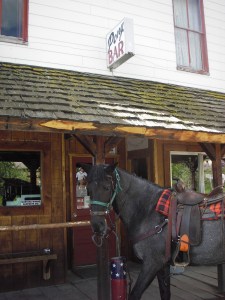
The Pony Bar. The world famous Pony Bar, Pony, Montana. My bar. Three miles up the road from the ranch. “Come on up for one drink,” a neighbor texted. It was a Thursday night and my other neighbor was slinging swill at the bar. What the hell, I thought.
When I got there the bar was full of cowboys and ranchers. Neighbors. They were well in. Shots and beers. Then they all piled into their pickups. I was mid-sentence in some lame story: Crunch!!!
My car, parked across the street, met the rear bumper of a ranch pickup.
And the biggest landowner in Madison County met the biggest bird hunter in Madison County. If I’m not the luckiest son of a gun in Montana, I don’t know who is. Good luck in Pony, Montucky.

Next season: “Um, hey Bob, this is Tom. Do you mind if I take my setters out for a spin on that chunk of ground up behind my house? I’ve seen some huns up there.”

Damn, if I’m not the luckiest guy in the whole bird hunting world.

Ponies and ranchers and bird hunters all gather at the Pony Bar in Pony, Montana.

Prickly

It is the beginning of the longest season and temper flares now and then like bursts of gas refinery burn-off. Prickly. Irritable. Sloth. No long walks with dog and gun. Those are far ahead. Too far ahead. Irritable itch. We’ll get through. Somehow. Somehow. Some way.

I think.

–TR

Week-old chukar

It was a romantic dinner. Candlelight. A fire crackling in the woodstove, splashing orange shadows on the walls of the old ranch house. A decent Malbec. Some tunes.
And chukar. Sauteed in olive oil with an excellent mild curry paste added on low-simmer. Red peppers, cloves of garlic, slivers of sweet onion. Served on a bed of rice. Delicious white, wild meat, spiced just right. A most successful evening.
A week later, my old die-hard bachelor habits resurface. I dig in the refrigerator, find the remnants of that spectacular meal. I’d sent half home with my lady and she prudently ate it the very next day for lunch. My half I forgot about and now, like a treasure discovered at a garage sale, it resurfaces. Eureka! I’m not shoveling in microwave popcorn after all.
When was that meal anyway? I wonder, asking my canine friends. They don’t remember. Surely this has still got to be good, right? They agree. Offer to eat it for me.
Without female wisdom this night to guide me, I dive in.
I can put it on a tort! Melt some cheese! Dab a little Indian hot relish to top it off!

And so I do. And it turns out well. Nearly as delicious as the first time, with only the lovely company lacking.
Two hours later, a rumble. Hark! What was that? Distant thunder. A crack of gastric lightning! Silence rent with a sound much like a stepped-on frog. From under. Fumunder. What?! I’m tore up. Battered in a bile hailstorm!
I sprint from bedroom to bath and fling porcelain out of my way. An explosion! Then silence. A thunderclap!! Another! What?!
Two hours later, I shiver and sweat in bed, timidly sipping water, awaiting the next distant rumble and thinking: Goddamndable chukar partridge. Even in the off-season, they win. Little bastards.