Raw

In the flung-out.

It is the land.

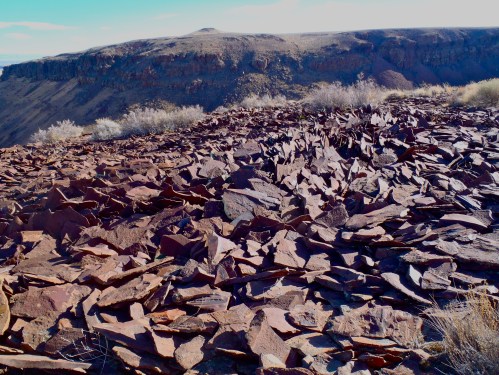
This place of bitter winds west, then north, then south, then east. This place of sagebrush taller than the running lights on a diesel one-ton. This place of clattering shale. This place of cold stream in a thirsty land, clear water that nurtures cutthroat left over from a great inland sea. This place of high mare’s tail clouds and thin blue tint. This place of rawness where the land itself is the lure, the challenge, the reason.

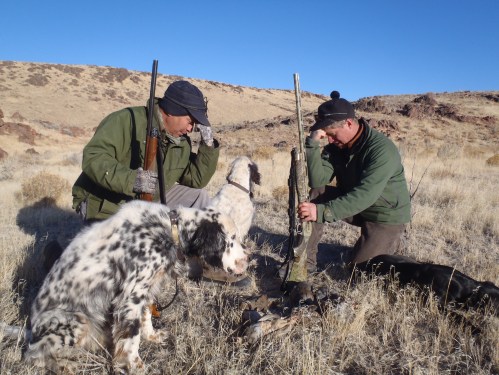
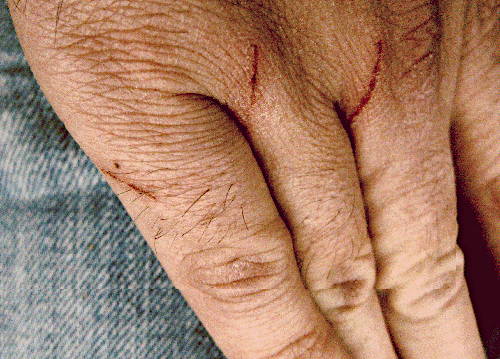
You go there for the land. It reduces your old knees to pain. It reduces your herd of dogs to hide and bone and sinew and honed muscle and bleeding pad. It tears the paunch from beneath your forty-thousand dollar four wheel drive. It grinds the heel and toe from your three hundred dollar boots. It abrades and scrapes and lacerates the stock of your one-thousand dollar shotgun. And you go.

This is the place you dream of when, at long last (for some) and too soon (for you) the season finally closes. This is the place that you have captured on camera and put on computer so–late winter–you can see those haunts again and again as the screen-saver at your work place folds through an autumn’s memories.
Only part of why.

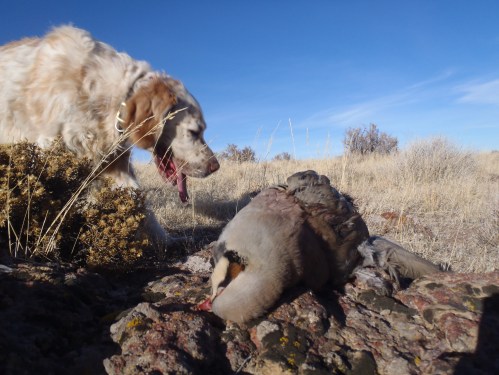
You remember the stealthy creep of Sage in the sage, birds ahead, heart racing, finger at safety, waiting, waiting for that flush. You remember thinking: swing on one bird, pull the trigger. You remember one side of your face turning raw and frozen in that tear-jerking west wind. You remember the music of dinner-plate shale. You remember the taste of Kentuck bourbon, Dominican cigars. You remember laughter around the wall-tent woodstove. You remember the sound of wind stroking the desert stream willows and the pop of juniper on the fire. You remember the “whit too, whit too, whit too” of a fleeing chukar with the wind at his back and the Rebel rally cry from atop the far canyon wall. The smell of sage beneath boot and tire. The feel of an artifact from another time and another people in the palm of your hand. The deep glossy shine of obsidian. The hope in your heart when you cut new chukar tracks in old snow.

But most of all, you remember the land.
Dance floor of the Devil.

Seventy

In the span of eight decades on Earth, the man has seen much. World history, to be sure. But pheasant history too. He has seen the rise and fall of borrow ditch and shelter belt. He has seen the eradication of weedy fence lines and weedy row crops. He has seen the genesis of CRP and, in the next Farm Bill, its possible extinction. Pheasants have come and gone, risen and fallen, risen again, and fallen again. Each time, the peak of the curve is significantly lower than the last peak years before. He has seen fields where he hunted pheasants as a child in eastern Colorado and western Kansas turn dry and barren and fill with weeds. The rows of corn he hunted in college have sprouted condos and shopping malls. He has seen the termination of a time when one simply found a patch of good cover and started hunting and the emergence of orange-painted fence posts and red-faced farmers. The end of “go ahead and hunt” and the onset of “it’s one hundred dollars a day.” He has seen the team-drawn plow fade into rusty history and the dawn of the $100,000 combine. He has seen the birth of pesticides and herbicides and the death of many living things as the result.
For seven decades, he has been hunting these Chinese ditch parrots. He hunted the first-ever season in Colorado, shooting his single-shot 20 at everything that rose before a black pointer of mixed lineage. When he finally started hitting, Dad told him, “Okay, that’s enough. Now you can shoot only roosters.”
He doesn’t lament the fields turned under, the loss of shelter belt, the consumptive appetite of clean farming. Instead, he looks back on seventy years of pheasant hunting and says, “I’ve been lucky.”
Today, with the wind whipping off the Rocky Mountain Front, drawing tears to the eye, snot to the nose, he turns his young setter into the wind and walks the tree rows on the lee side of a 40 mile per hour blast. There’s a walking stick in the truck, just in case, but he doesn’t reach for it. Instead, he balances a Belgian Browning, bluing worn to bare steel, in a gloved hand and he follows his young girl. She points.
A pheasant rises, banks, and falls. She brings it in. Seventy years before the gun, memories like elm leaves on a west wind.